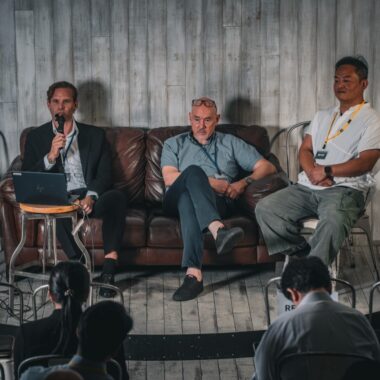
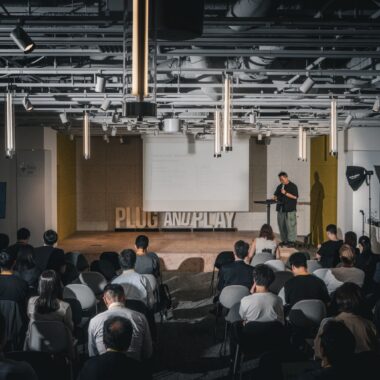
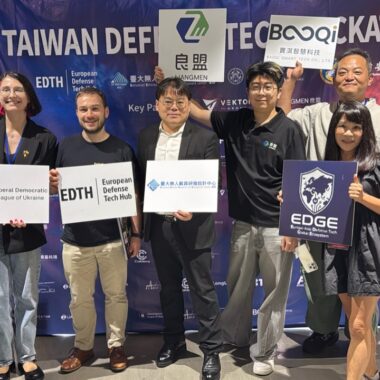
Baoqi Smart was selected to join NTU Garage in 2025. The opening ceremony became an early public milestone for the company and an opportunity to present its applied-AI work to an external audience.
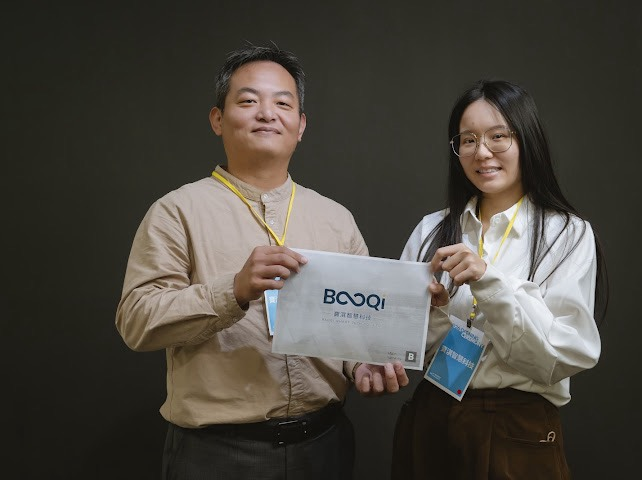
Since that early milestone, Baoqi Smart has developed a three-product mission architecture: ZERO for prediction and option comparison, ALAYA for heterogeneous team coordination, and BABYLON for mission and resource configuration.
The core product thesis is simple: available hardware becomes more valuable when software understands its capabilities and coordinates it as a team. Capability profiles, shared mission state, dynamic assignments and outcome records connect individual platforms to a common objective.
The 10 public mission demonstrations show probability-driven search, resilient coordination, resource allocation, recovery and mission learning. Platform interfaces connect these workflows to manufacturers, compute providers and systems integrators.
Baoqi Smart is therefore seeking programmable UAV manufacturers, systems integrators, autonomy researchers, validation partners, and strategic investors. Priority partners can provide documented SDK or API access, telemetry, camera streams, platform specifications, safe test access, and a technical liaison for joint integration.
The NTU Garage opening remains an important point in Baoqi Smart’s development: the moment an earlier applied-AI portfolio began converging into a focused autonomy company built around mission intelligence, interoperability and cumulative learning.
ZERO × ALAYA × BABYLON: Turn resources into mission capability.
ZERO anticipates situations and compares options. ALAYA coordinates heterogeneous teams and turns mission outcomes into reusable experience. BABYLON composes platforms, components and supply options around the mission. Together, they connect prediction, coordination and configuration—so every mission strengthens the next.
Open the 10 mission demonstrations · Discuss a mission or platform integration