

TECHNOLOGY & ARCHITECTURE
Technology
ZERO decides. ALAYA executes. People approve.
Tactical decisions above partner vehicle-control systems.
See how mission and command inputs, BAOQi’s tactical decision AI, partner execution systems and heterogeneous vehicles exchange responsibilities and information. Existing C2 and GCS may span several functions.
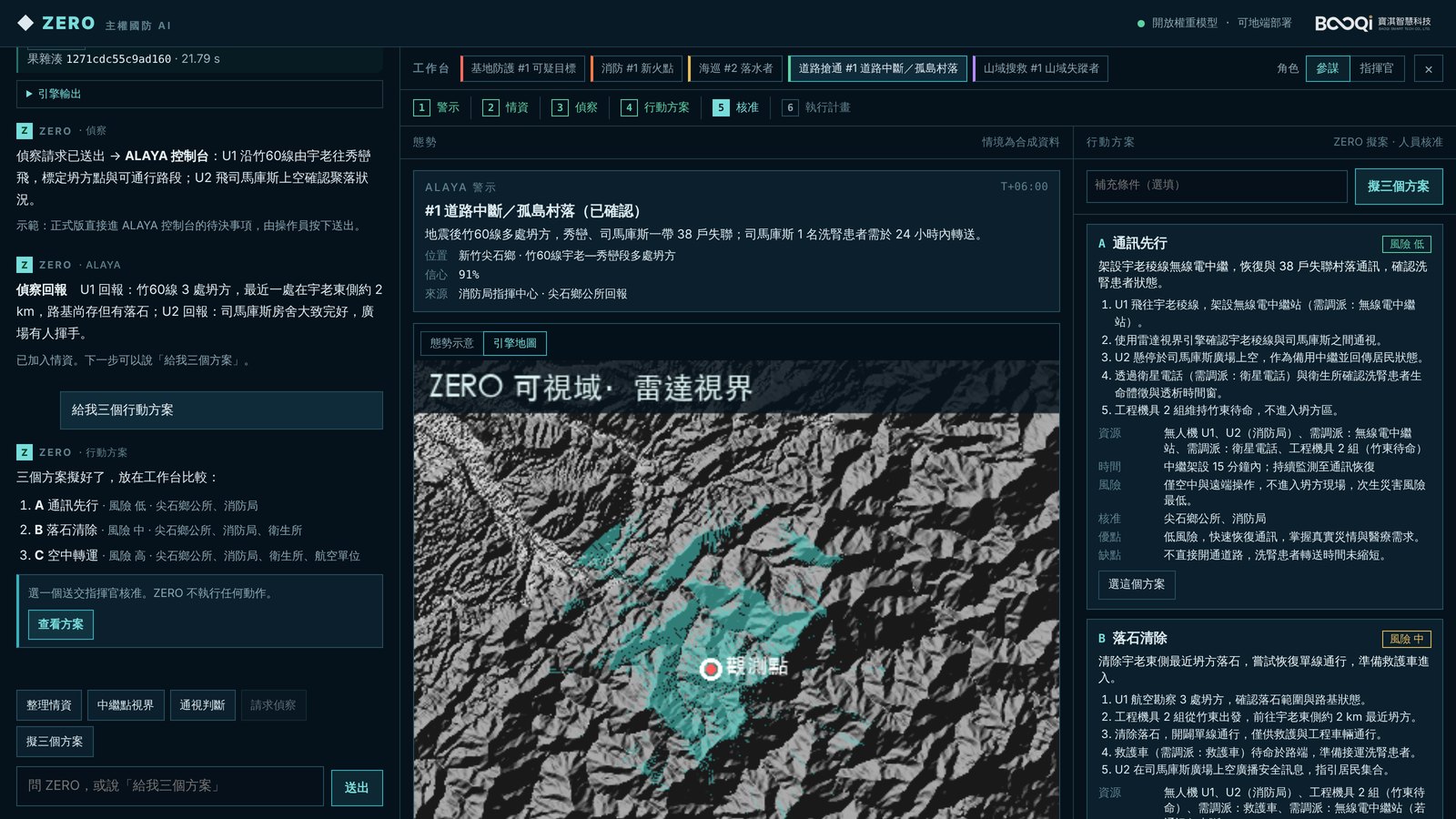
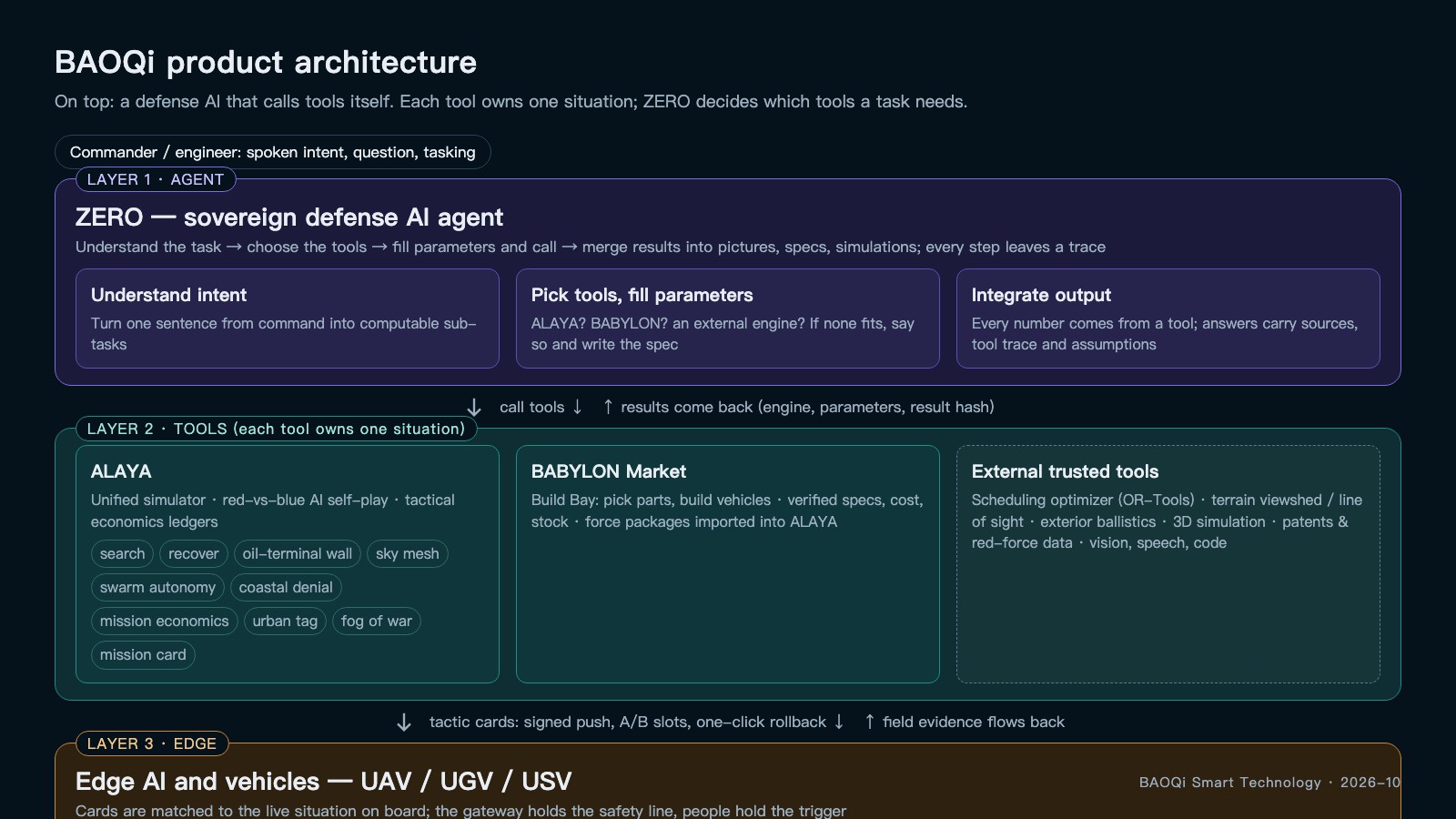
ARCHITECTURE · AT A GLANCE
The whole system on one screen.
ZERO in depth →How a tactic reaches the aircraft →System roles in detail →
System roles / tactical decisions
Where BAOQi fits in the system
BAOQi decides how a heterogeneous team should divide work and respond to change. Integrated partner systems control and execute each vehicle's actions.
01 / Mission and command
Mission / command
People and existing command structures set mission objectives, commander intent, constraints and authorization.
02 / BAOQi
BAOQi — tactical decision layer
Evaluate courses of action, allocate roles and tasks, set priorities, and replan as the situation changes.
ZERO
Behavior anticipation and candidate course-of-action generation.
ALAYA
Tactical option assessment, role and task allocation, and adaptation as conditions change.
Downward: tasks, roles, priorities and constraints
Upward: status, observations and execution results
03 / Partner systems
Partner execution and control systems
Turn assigned tasks into executable actions and report status. BAOQi does not replace these systems.
- Autopilot / flight control
- Vehicle control
- Navigation
- Local collision avoidance
- Formation motion control
- Communications
04 / Vehicles and sensors
Heterogeneous vehicles and sensors
- UAVAir
- UGVGround
- USVSurface
- UUVUnderwater
- SensorsObservation
Task and status exchange
The tactical decision layer receives authorized missions and status reported by existing systems, then produces task allocations and adjustments.
ONE MISSION · THREE CORE CAPABILITIES
From configuration to coordinated action.
Define the mission, then connect resource configuration, tactical choices and team coordination. Feed outcomes into the next cycle so strategies, teams and configurations develop together.
Define goals and resources
Build the mission configuration
Generate tactical choices
Coordinate the whole team
↶ Assess mission value · Build strategies and experience ↶
TECHNOLOGY & ARCHITECTURE
Explore the systems behind the mission.
Follow the concepts, engineering views and research that connect sensing, communications, edge AI and heterogeneous platforms.
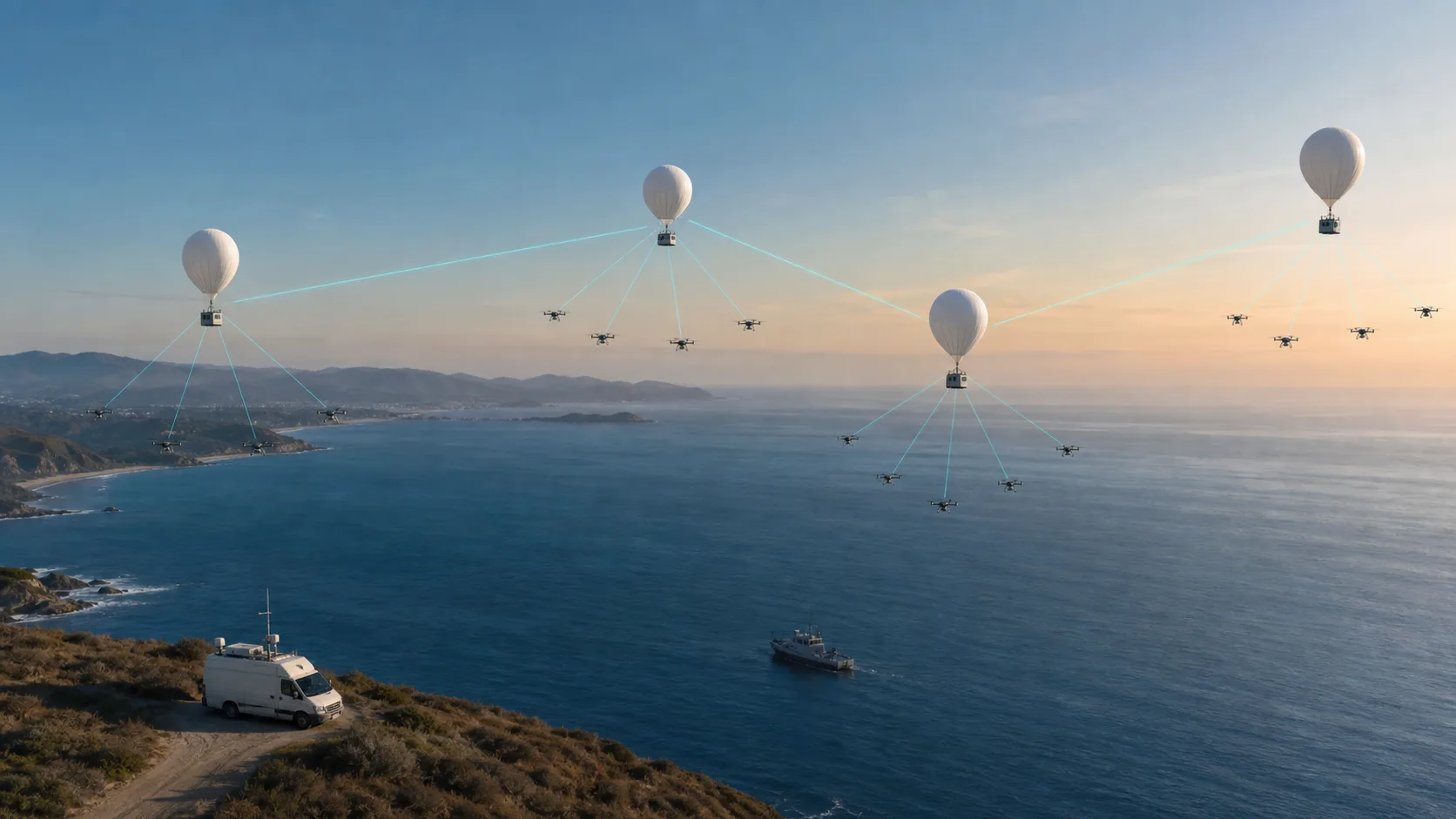
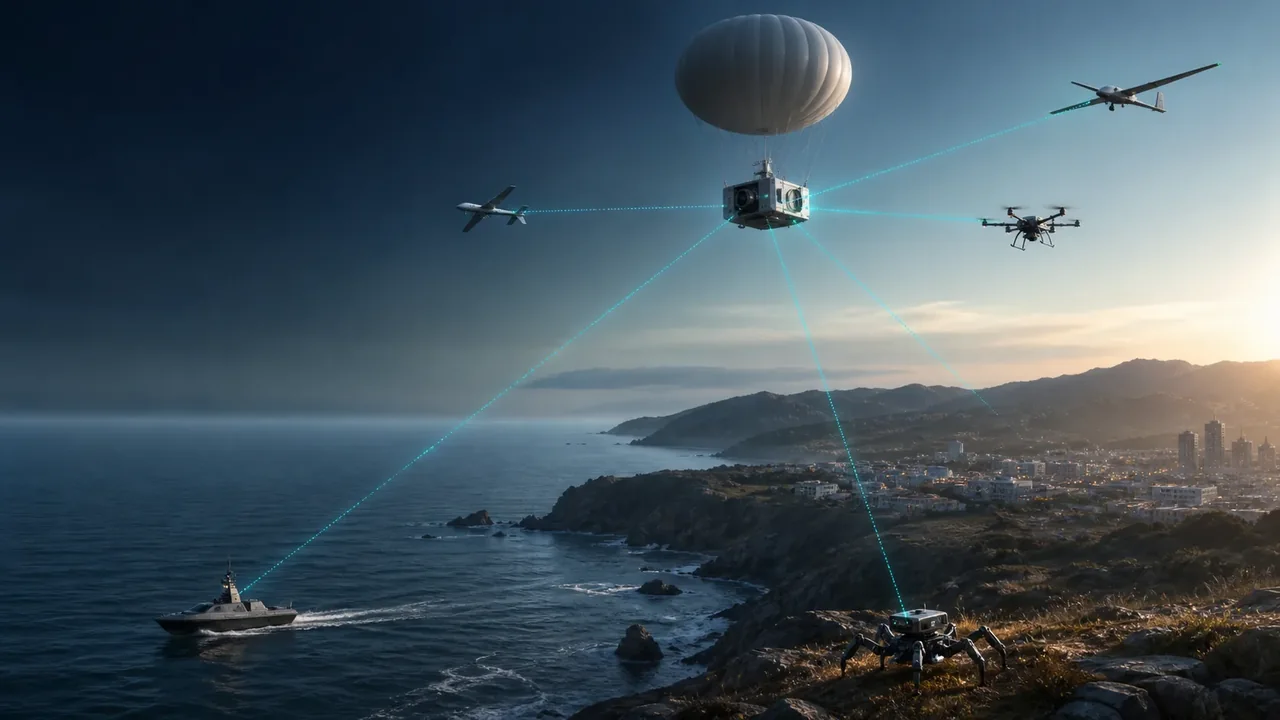
SKY MESH
Distributed nodes. A shared sensing picture.
Persistent sensing, communications relay and complementary coverage across a distributed network.
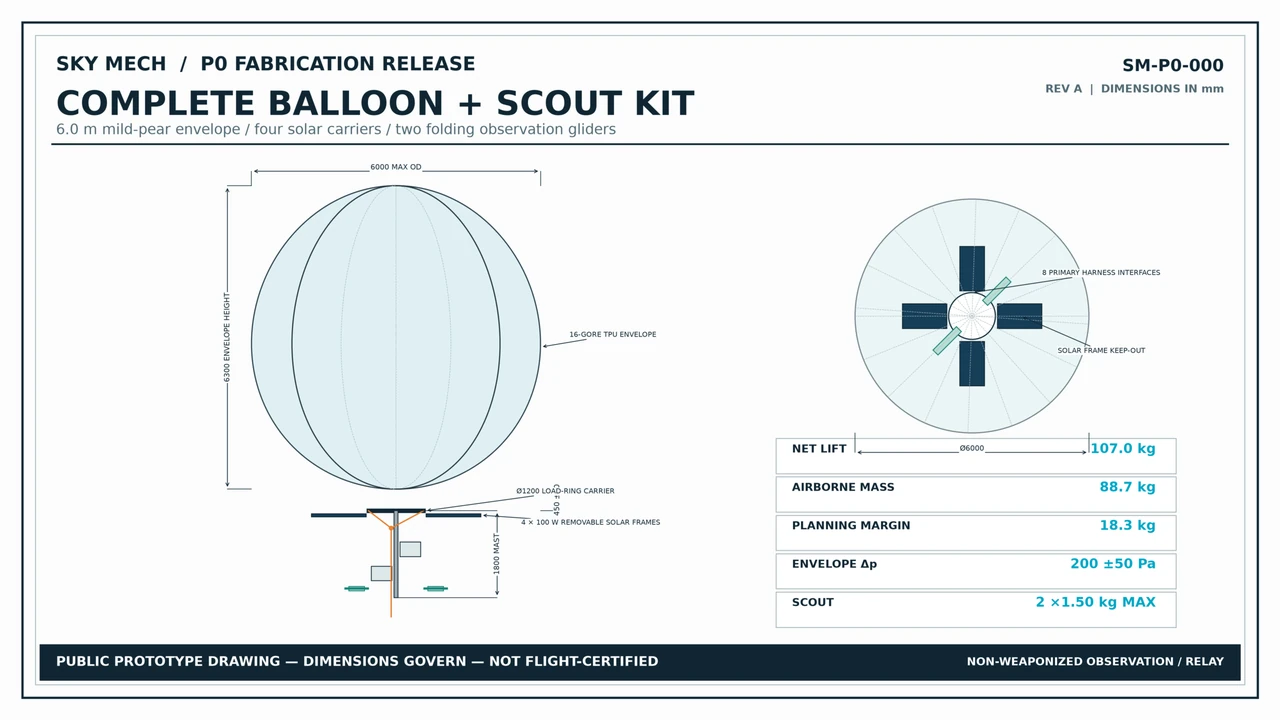
SKY MECH
An individual sensing and relay platform.
Explore the SKY MECH P0 engineering layout and system packaging.
MISSION PERFORMANCE
Measure what the team achieves.
Compare mission completion, continuity, resource consumption and the strength available for the next mission.
TECHNICAL RESOURCES
Engineering & research archive.
Original English research records and engineering references. Historic names and dates remain attached to their evidence.
The engineering behind the mission loop
ZERO
Mission and candidate plans
BABYLON
Resources and capability configuration
ALAYA
Coordination and scenario comparison
Explore every capability
Open a capability for the full story01Turn documents, images and briefings into the next decision
Connect retrieval, speech transcription, image understanding and dedicated computational tools. Move from a question to sources, analysis, candidate options and a working record.
02Carry the conversation into a mission handover
ZERO creates reconnaissance requests and execution plans. ALAYA operators acknowledge, report, return and close the same task card, connecting the decision with its follow-through.
Explore the workflow ↗03Connect mission simulation with autopilots and visual environments
An engineering workflow links JSBSim physics with shared timing, coordinates and state exchange across ArduPilot, PX4, Isaac Sim, Unreal Engine, ROS 2, DIS and HLA.
Explore the workflow ↗04Change the location. Rerun the question
Select a location, edit fleet routes and inspect spatial relationships through satellite maps and Cesium 3D, comparing the scene, resources and mission plan together.
Explore the workflow ↗05Make each rerun explain its differences
Connect decision logs, event timelines, AAR, source versions and hashes. Sensor CSV comparison and spatial playback turn research results into reproducible deliverables.
Explore the workflow ↗06Different vehicles. One mission carried forward
Assign roles by capability and simulate sensing handovers, energy rotation, interrupted links and failure recovery. Compare the mission value of team coordination through Formation and Kata.
Explore the workflow ↗Build toward the next mission
Product roadmap01Build a strategy pipeline that compounds across missions
Extend existing Red–Blue evaluation and candidate selection into continuous large-model self-play, cross-scenario comparison, Formation and Kata knowledge, and distillation into edge policies.
02Carry simulated team roles into field integration
Expand synchronized autopilots, edge tactic cards, platform interfaces, sensor calibration and multi-vehicle trials, extending the mission evidence chain into deployment.
03Connect the discussion to the next engineering iteration
Turn meeting concepts into scenarios, specifications and work items, then connect code changes, tests, review and versioned delivery to shorten the path from requirements to validation.
BAOQi
Bring your mission. Build the next solution.
Start with the objective, vehicles and resources. Explore tactical choices, coordinated teams and mission configurations.