Taiwan’s proposed NT$210 billion special budget for indigenous unmanned systems is more than a procurement signal. It is a market signal that the country intends to build a durable, non-PRC supply chain for high-consumption autonomous assets.
According to Central News Agency, the proposal calls for 1,446 coastal reconnaissance UAVs, 208,200 coastal mission UAVs, and 1,320 small unmanned surface vessels. The proposal remains subject to Taiwan’s legislative and budget process, and the quantities may evolve with operational requirements. But the scale already changes the systems question.
At this scale, the center of gravity shifts
With ten UAVs, the main question is usually whether each aircraft performs well.
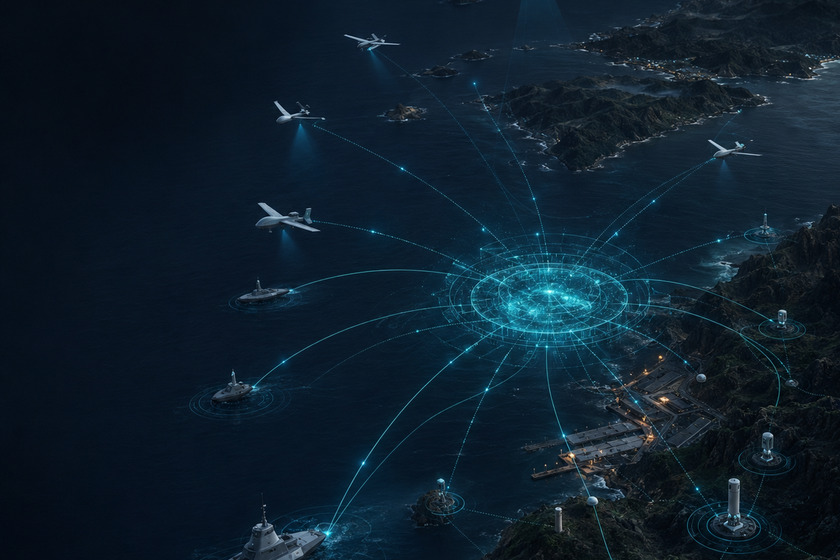
With more than 210,000 planned air and sea assets—built by different vendors, carrying different sensors, using different links, and operating under different energy and maintenance constraints—the question becomes:
Which available asset should execute which task, at what time and place, under what communications, energy, cost, and risk conditions?
Hardware creates inventory. A decision layer turns inventory into capability.
Integration is not only an API problem
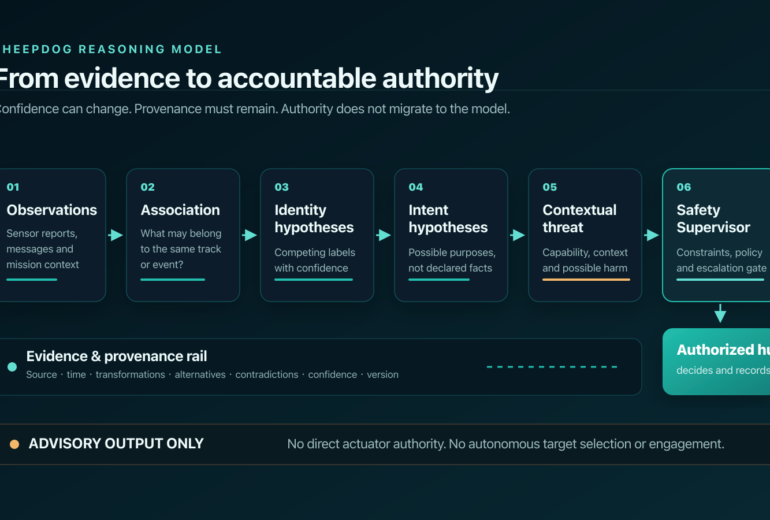
Connecting platforms is necessary, but interoperability alone does not decide how to use them. A heterogeneous force also needs a repeatable way to compare capabilities, evaluate force mixes, allocate roles, preserve reserves, recover from failure, and explain why a decision was made.
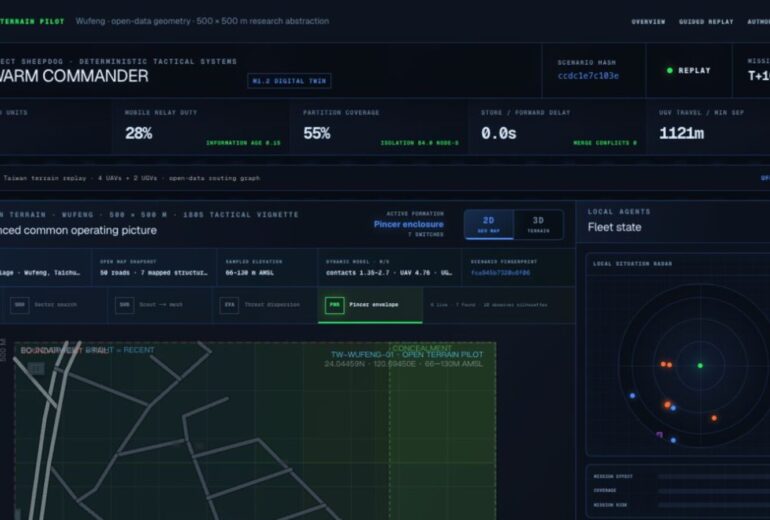
This is where SHEEPDOG is designed to operate: above individual vehicles and below strategic intent, as a simulation, mission-planning, and tactical-orchestration layer.
- Capability Passport: a structured profile for mobility, endurance, sensing, communications, payload, cost, constraints, and failure modes.
- Mission Utility: a measurable tradeoff across success, loss, time, energy, replacement burden, operator workload, and future options.
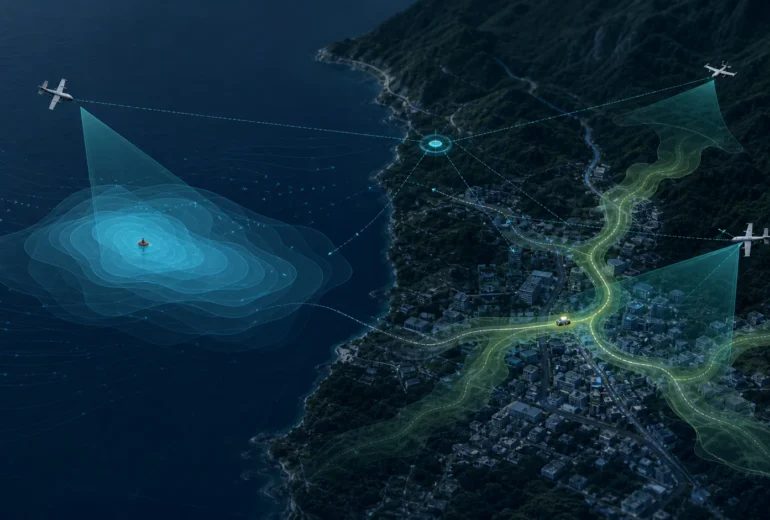
- Simulation and tactical search: repeatable Taiwan-context trials across terrain, coastlines, communications degradation, attrition, and changing mission demand.
- Playbook and TTP library: recurring patterns, role rules, safety gates, and fallback behaviors distilled from verified simulations.
- Decision log: a traceable record of trigger, assignment, objective, outcome, and recovery action.
A practical B2B2G path
SHEEPDOG does not need to become the manufacturer of the 208,200th airframe. A more defensible role is to help domestic platforms enter a common evaluation and coordination environment:
- A manufacturer provides a platform and its capability profile.
- SHEEPDOG converts that profile into a Capability Passport.
- The platform is tested in repeatable Taiwan-specific scenarios.
- Different fleet compositions, role assignments, and failure conditions are compared.
- Reviewable evidence becomes a playbook, Model Card, and decision log.
- Only bounded and validated behaviors move toward edge execution and physical trials.
This turns the domestic supply chain into something more than a catalog of vehicles. It creates a path from hardware availability to measurable, coordinated mission capability.
The next roadmap: force composition and sustainment
The same simulation architecture can support a higher-level question: if a force begins with 1,446 reconnaissance UAVs, 208,200 mission UAVs, and 1,320 USVs, how long can it sustain required mission capacity under different readiness, attrition, repair, replenishment, communications-failure, and production-rate assumptions?
We call this roadmap direction the Industrial / Force Composition Simulator. It would connect tactical outcomes with procurement, maintenance, and replenishment decisions—because a high-consumption force must be designed not only to win one engagement, but to remain usable over time.
Our thesis
Taiwan is preparing to build the hardware supply chain. SHEEPDOG aims to become the software intelligence layer that helps turn that supply chain into coordinated capability.