English
RESEARCH
Research
Methods, prototypes and early concepts, kept in full: the earlier mission loop, the three operations rooms, the coordination library, red–blue AI sparring, mission demonstrations and technical records.
- One mission. The best fleet, and the best way to fight it.
- Defense AI that answers to your policy, not a vendor’s.
- Three operations rooms. One decision layer.
- From a mission question to a decision worth funding
- Team Intelligence. Lower Hardware Requirements.
- From Assembly to Execution: One Closed-Loop Platform
- Affordable Vehicles. Greater Team Value.
- Different Vehicles. One Coordinated Team.
- Why BAOQi?
- Defense Technology Partnerships & Integration
- A Partner Network. Entry by Capability.
- Explore BAOQi
- Two screens. One wargame, played to the end.
- Mixed assets. Mission-led teams.
- Mixed-Vehicle Teams. Multiple Missions.
- The mission continues. Roles adapt.
- SKY MESH · SKY MECH: research library and prototypes
- FAQ
ALAYA / Mission loop
One mission. The best fleet, and the best way to fight it.
The commander sets the mission. ALAYA assembles candidate fleets from BABYLON Market and fights them on real terrain against a red force that changes its tactics, searching fleet composition and tactics together to find the best combination for every dollar of budget. The result goes straight to each vehicle, and field data comes back to make the next run sharper.
- 01Set the missionPlace, threat, weather, time limit, budget
- 02Build the fleetOff the shelf from BABYLON Market, or mission-built from modular parts and 3D printing
- 03WargameReal terrain, and the red force learns too
- 04AI finds the best planFleet composition and tactics searched together
- 05Push mission packagesSigned packages go to each vehicle’s edge AI; if the link drops, it still carries out the commander’s intent
- 06Field feedbackData from every mission comes back to calibrate the simulation
- The fleet you have→the best way to fightBefore the mission
- A mission→the best fleetForce design and procurement
- Your current fleet→which vehicles to addSuccess rate gained per NT$10,000
- One fleet→many missionsDual use: defense and disaster response
What a staff wargames overnight, ALAYA runs a hundred times in minutes.
The commander sets the mission, terrain and threat. ALAYA plays every course of action to a result on real terrain, ranks them, and hands the ranking to a person for approval.
 Step 1
Set the mission
Place, wind, terrain, threat, vehicles and time limit, set directly on the map.
 Step 2
Simulate
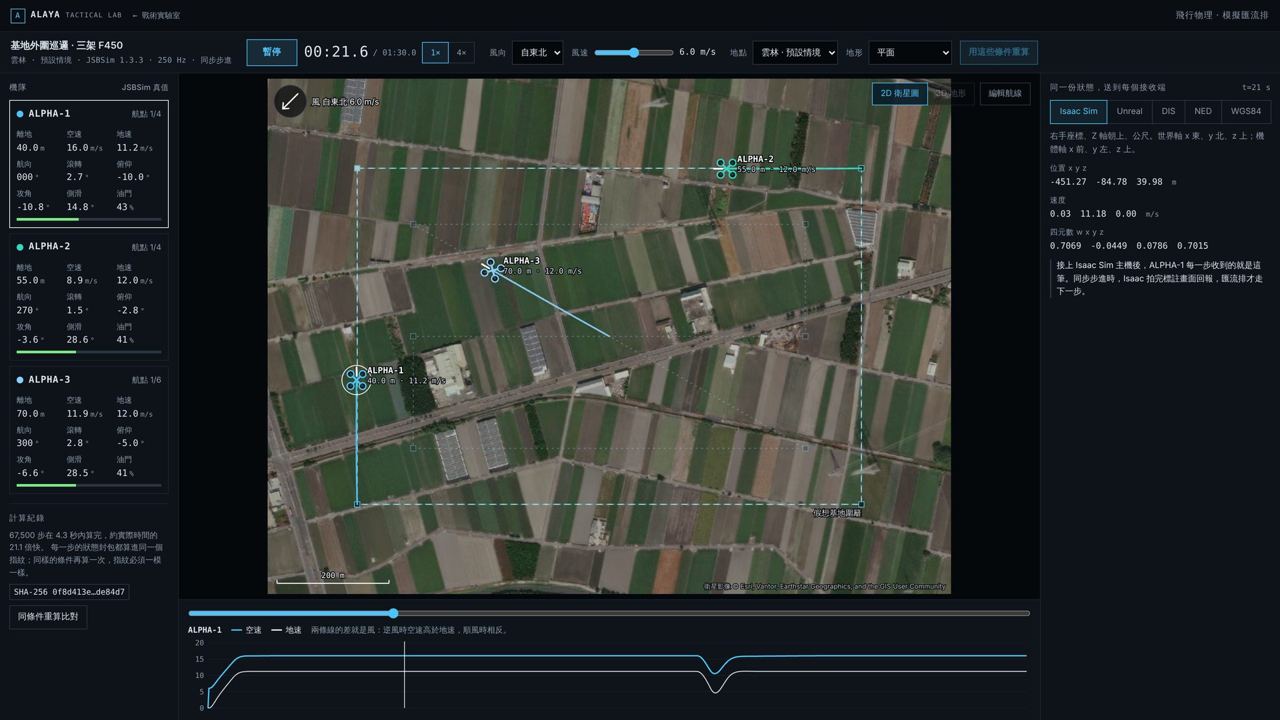
Real terrain, an enemy that moves and reasons, radio links and batteries, computed every second.
 Step 3
AI wargaming
Each course of action is fought across dozens of battlefield draws; every win, loss and cost is recorded.
 Step 4
Best course of action
Ranked by success rate, time, exposure and attrition, with a full replay of every run.
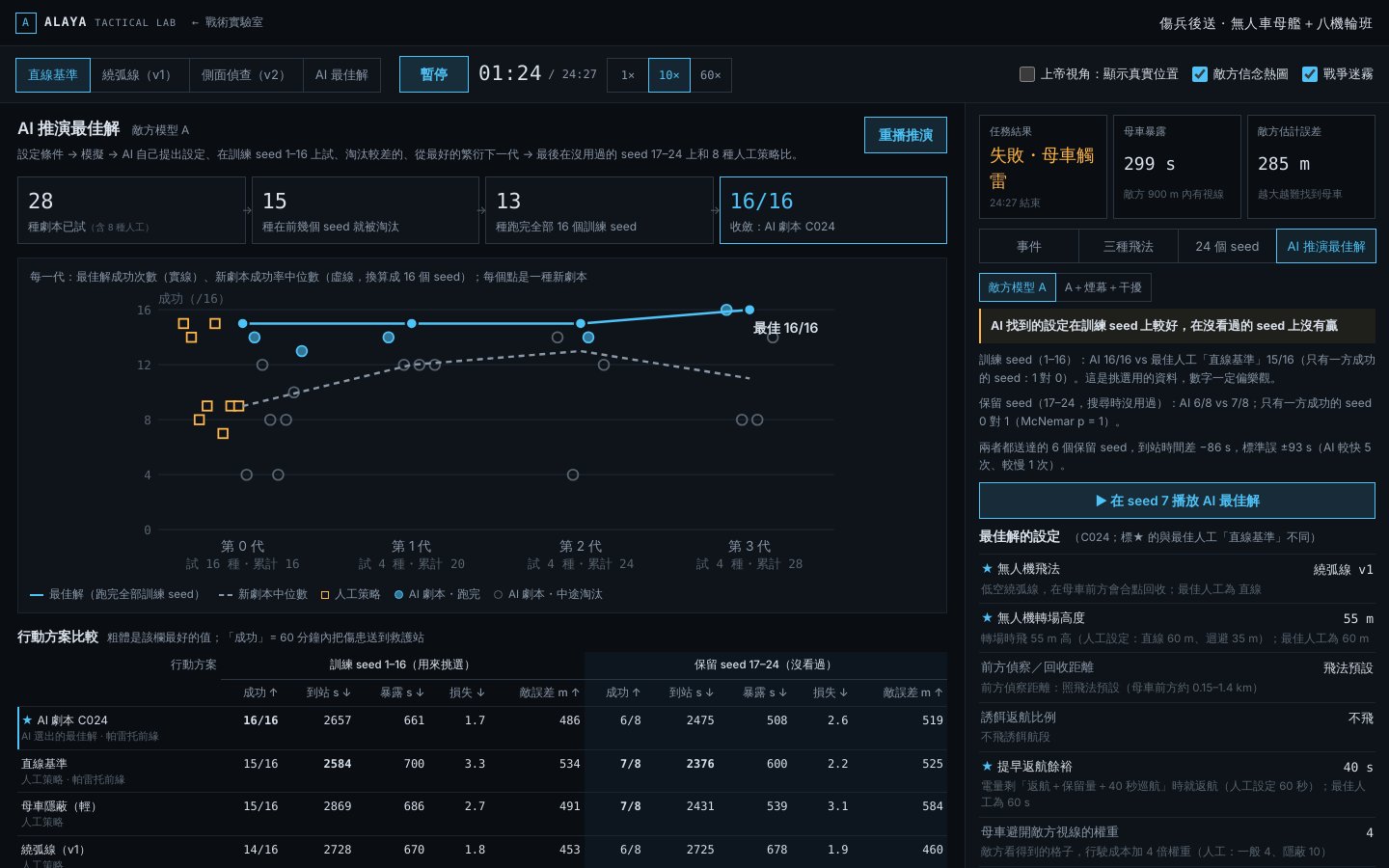
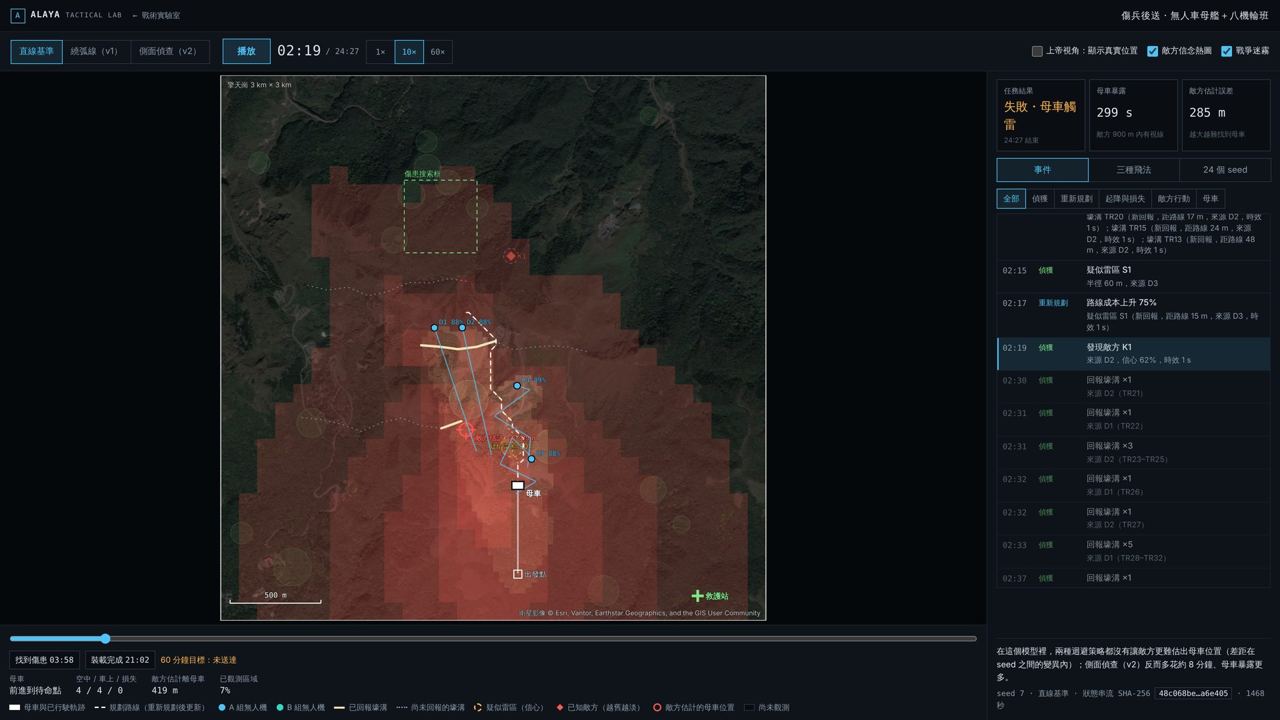
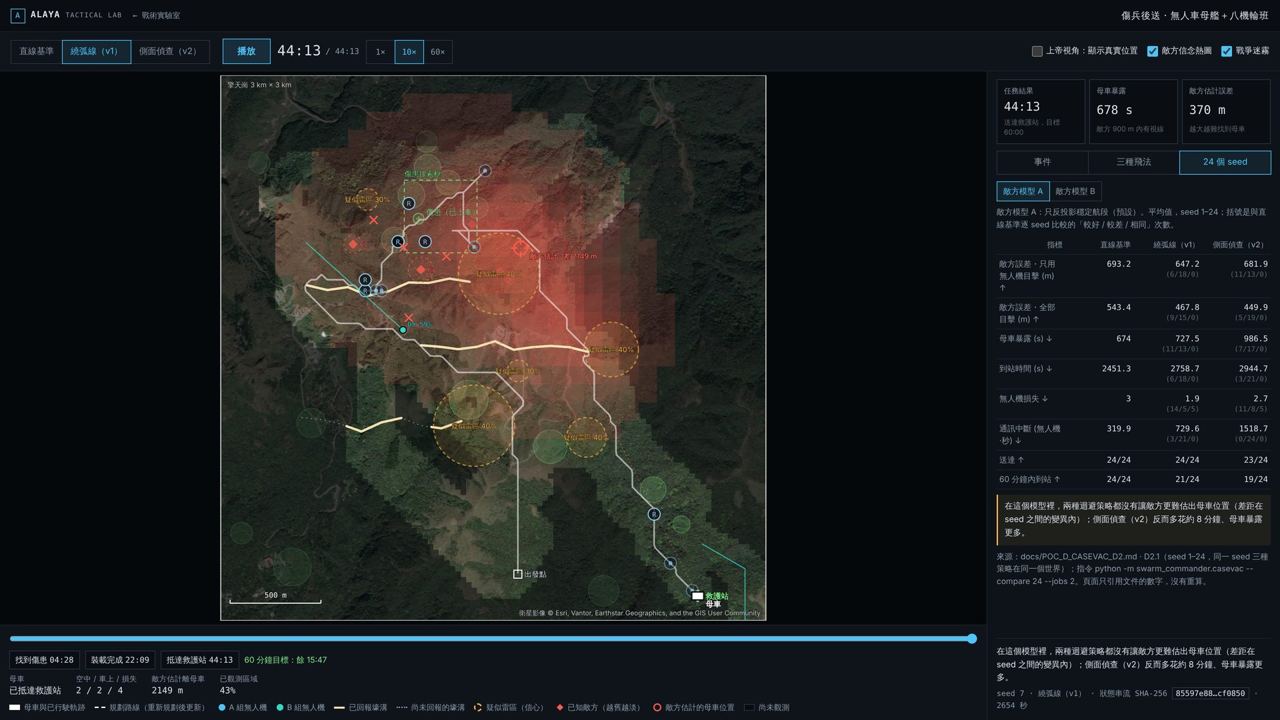
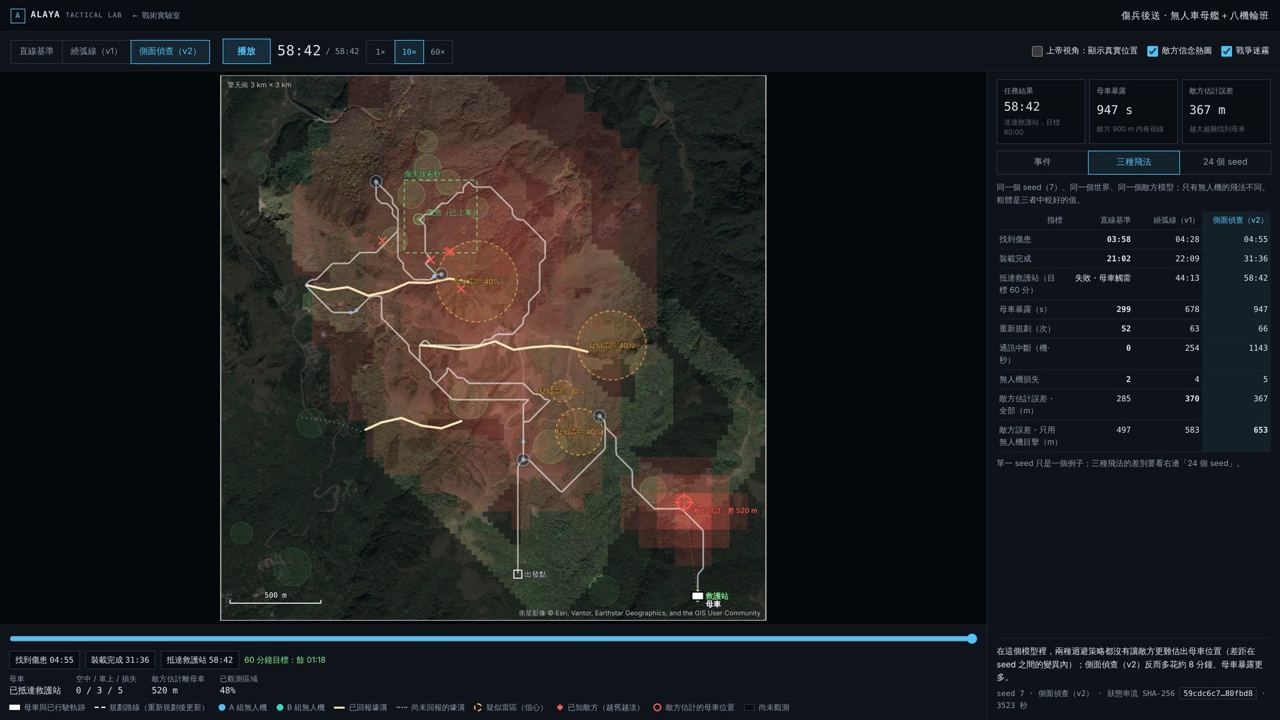
Course-of-action comparison: casualty evacuation from a UGV mothership
| Criterion | COA 1Direct baseline | COA 2Heavy concealment | COA 3Light concealment Recommended | COA 4Concealment + flank recon 1 km | COA 5Concealment + flank recon 2 km | COA 6Flank recon 2 km + decoy |
|---|---|---|---|---|---|---|
| Delivered within 60 minhigher is better | 22/24 | 16/24 | 22/24 | 12/24 | 15/24 | 14/24 |
| Mean time to aid stationminutes, shorter is better | 40.3 | 43.7 | 44.0 | 50.5 | 46.1 | 46.3 |
| UGV exposed to enemy line of sightseconds, shorter is better | 667 | 629 | 637 | 558 | 732 | 557 |
| Drones lostfewer is better | 3.0 | 2.5 | 2.8 | 1.8 | 1.6 | 1.3 |
| Enemy error locating the UGVmetres, larger is safer | 681 | 736 | 697 | 782 | 865 | 815 |
Recommend COA 3, light concealment. It delivers 22 of 24, the same as the direct route, with less exposure and a harder target for the enemy to locate, at a cost of 3.7 minutes on average. Pushing recon out to the flank protects the mothership best, but delivery drops to about half.
Failure rules: entering a real minefield, missing the 60-minute golden hour, or losing every drone and the link before the casualty is found. Every figure opens the replay and state-stream hash of that run.
00 / ZERO · SOVEREIGN DEFENSE DECISION AI
Defense AI that answers to your policy, not a vendor’s.
Commercial AI assistants refuse ballistics, weapon-systems engineering and tactical questions because a foreign vendor’s content policy says so. ZERO is BAOQi’s sovereign defense model: non-PRC open weights, adapted for defense work, hosted on Taiwan compute, deployable fully offline, audited end to end, with a human in command. In conversation, the model decides which engine to call; people decide the action.
ZERO
Your policy. Your compute. Your data.
An open-weight, defense-use-licensed model adapted on ballistics, weapon-systems engineering and tactical doctrine, with physics engines in the loop for the numbers a language model must not guess.
Tactics forged around the clock
Two AI sides. 24 hours a day. 365 days a year.
Inside ALAYA, two AI sides play each other continuously, producing thousands of tactical patterns that are compressed into edge AI so front-line vehicles can improvise. The Foundry runs on ZERO.
Infrastructure a unit can own
Build program · annual license · continuous training
Pilot now on Taiwan’s national computing resources; deployment on the unit’s own servers next. A unit that funds ZERO owns the foundation every later tactical system is built on.
Guiding institution: NTU Unmanned Vehicles Research and Development Center. ZERO removes the vendor veto, not the chain of command: what the model may discuss is decided by the authority that fields it.
00 / DUAL USE · DEFENCE FIRST
Three operations rooms. One decision layer.
ZERO decides, ALAYA executes, people approve — built for defence first. The same engines are rerun in police and fire-service language, and each agency’s data stays on its own premises.
Why now
The networks are in. Judgment is the bottleneck.
County backbone networks, mobile command vehicles and live drone video are being wired into operations rooms. Information now arrives faster than a team can read it, and who goes where, first, is still worked out on a whiteboard. ZERO’s first job is to reduce the flow: merge duplicates, rank what matters, cite every source, run the terrain and resource maths, and hand people a short list of decisions to approve.
- 30relay stations in Yunlin County, live since October 2026
- 81fire-service mobile command vehicles by end-2028
- 22county fire departments already issued search-and-rescue drones and video systems
Sources: Yahoo News, 2026-10-21 · CNA, 2026-07-02 · Economic Daily News, 2025-11-21
Tactical Lab
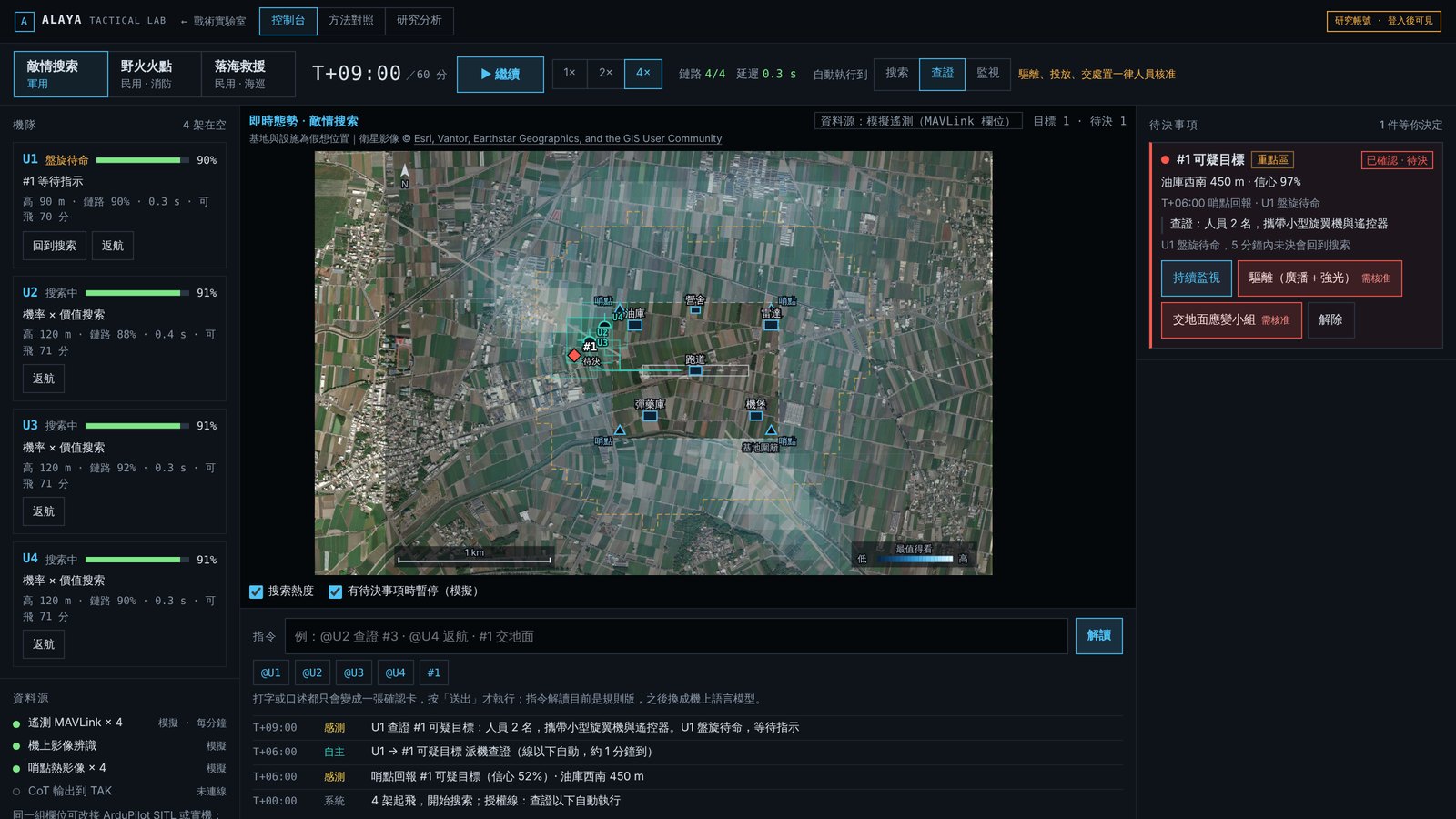
Base defence, runway repair sequencing, hostile search, fog of war.
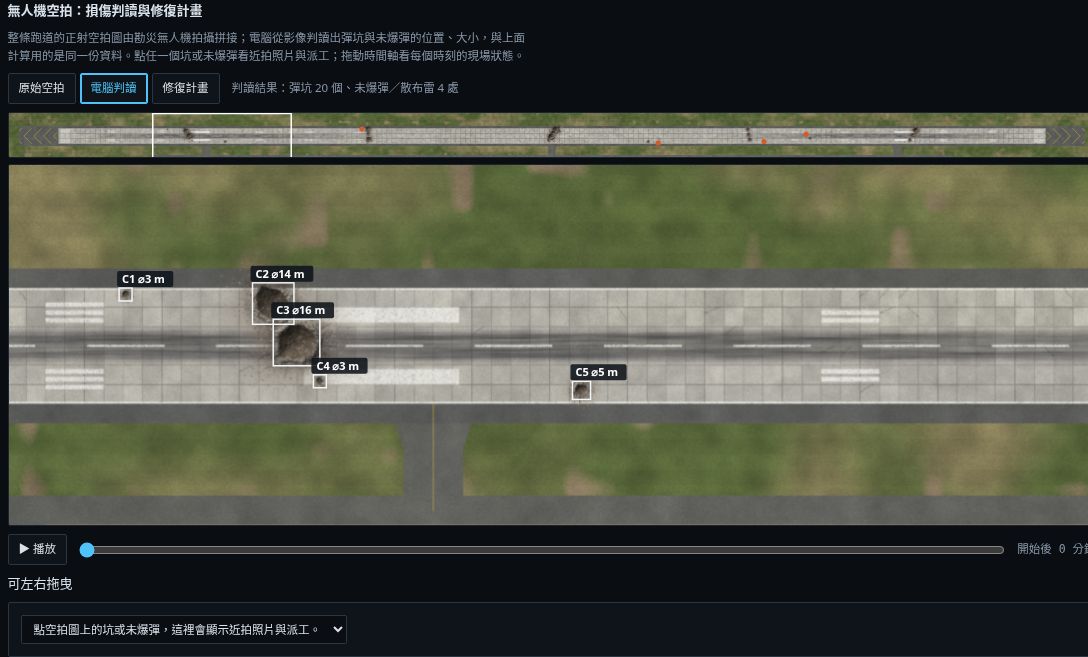
The defence-first prototype: viewshed and radar horizon, repair sequencing, probability × value search — all operable in the system.
Open the Tactical Lab ↗
Public Safety Rapid Decision Support System (working name)
Pre-entry reconnaissance, missing-person and fugitive search, perimeter watch at large events.
The same engines in police language; no lethal autonomy, and every release needs a person’s approval.
Open the Public Safety Lab ↗
Emergency Rescue Rapid Decision Support System
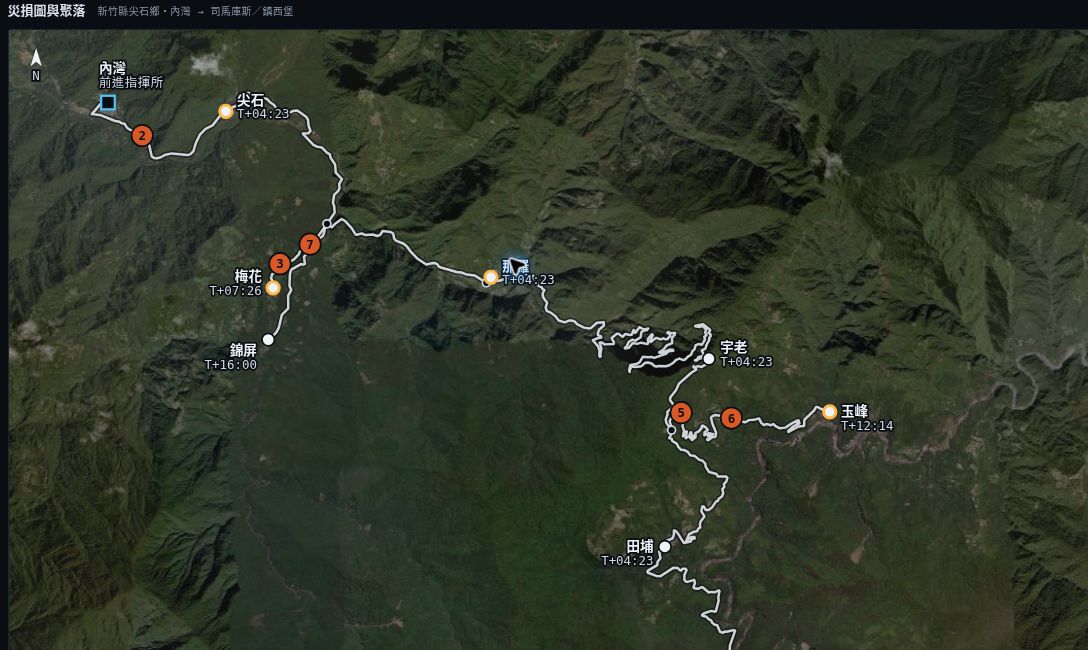
Mountain search, wildfire survivors, road clearance and cut-off villages.
Real road network, hypothetical damage; the system drafts three courses of action and the on-scene commander approves before anything moves.
Open the Rescue Lab ↗
Models and data can be deployed on each agency’s own premises.
From a mission question to a decision worth funding
Choose the team, compare the plan and put the next investment where it changes the outcome. ZERO, ALAYA and BABYLON connect decision support, mission coordination and resource configuration.
Different vehicles. One mission carried forward
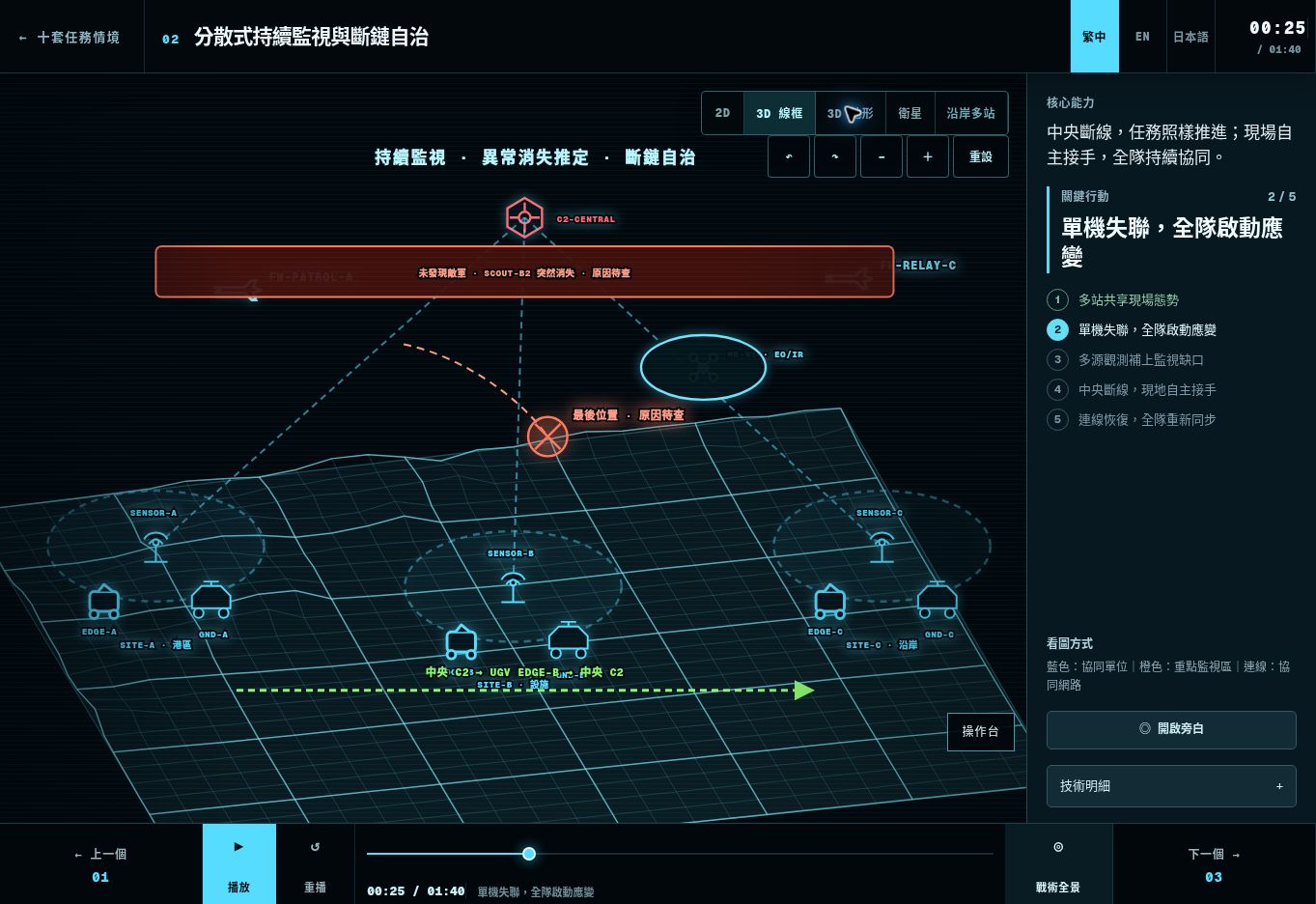
Assign roles by capability and simulate sensing handovers, energy rotation, interrupted links and failure recovery. Compare the mission value of team coordination through Formation and Kata.
Restore departures sooner. Build the budget around the outcome
Model repair machinery, clearance work, material waits, parallel crews and usable departure segments. Compare first departure, full recovery, aircraft waiting time and readiness investment.
Which road opens first—and who gets out sooner?
Place machinery, crews, airlift and evacuation vehicles on a real road network. Compare plans that account for equipment arrivals, road dependencies, patient deadlines and time spent waiting.
ZERO
Mission and candidate plans
BABYLON
Resources and capability configuration
ALAYA
Coordination and scenario comparison
Explore every capability
Open a capability for the full story
01Restore departures sooner. Build the budget around the outcome
Model repair machinery, clearance work, material waits, parallel crews and usable departure segments. Compare first departure, full recovery, aircraft waiting time and readiness investment.
02Which road opens first—and who gets out sooner?
Place machinery, crews, airlift and evacuation vehicles on a real road network. Compare plans that account for equipment arrivals, road dependencies, patient deadlines and time spent waiting.
03What does the next investment buy the mission?
Compare readiness levels against the same scenarios, with work orders, cost lines and resource gaps. Connect the next vehicle, repair set or budget increment to a measurable change in the plan.
04Carry the conversation into a mission handover
ZERO creates reconnaissance requests and execution plans. ALAYA operators acknowledge, report, return and close the same task card, connecting the decision with its follow-through.
05Start with what you own. See what the mission still needs
Use the visual Build Bay to compose vehicles and modules, organize BOMs and missing parts, inspect capability limits and energy estimates, prepare quote worksheets, and take configurations into ALAYA.
Build toward the next mission
Product roadmap
01Unit-specific models and on-premise deployment
The product roadmap brings domain adaptation, unit knowledge bases, model evaluation, on-premise and offline deployment, and continuous updates under the institution’s control.
02Build a strategy pipeline that compounds across missions
Extend existing Red–Blue evaluation and candidate selection into continuous large-model self-play, cross-scenario comparison, Formation and Kata knowledge, and distillation into edge policies.
03Carry simulated team roles into field integration
Expand synchronized autopilots, edge tactic cards, platform interfaces, sensor calibration and multi-vehicle trials, extending the mission evidence chain into deployment.
04Turn supply-chain data into mission assets that can be recomposed
Expand inventory dependencies, component provenance, alternatives, complete-kit validation, maintenance, replenishment and supplier data, connecting configuration with procurement and lifecycle cost.
01 / THE OPPORTUNITY
Team Intelligence. Lower Hardware Requirements.
Tactical coordination for heterogeneous unmanned teams
Formations, reusable coordination patterns and complementary roles put each vehicle’s strengths to work. Build mission-capable teams from more affordable platforms with lower individual performance requirements.
- ZEROFormation, Kata and coordination knowledge
- BABYLON MarketSelect affordable, complementary fleets
- ALAYA WargameCompare mission outcomes and fleet cost
Explore the market challenge and fleet comparison
Mission-specific teams should be rapidly assembled from existing components, not purchased as new proprietary models for every mission.
The global defense market offers more unmanned vehicle choices than ever. Yet many systems follow a single-platform, closed-ecosystem model: one hardware stack bound to one software stack, one mission type matched to one airframe.
Rising Costs
Every new mission can trigger procurement of a dedicated platform. Fleet size and logistics burden grow together.
Attritability Locked Out
Expensive proprietary hardware constrains deployment choices and makes losses in high-risk missions harder to absorb.
Inventory & Logistics Strain
Separate fleets for each mission duplicate parts, maintenance lines, and training requirements.
The cost shows up first in people. Under the Army’s current tables a tactical UAV team is four soldiers per system: 23 combined-arms battalions, 92 operators (China Times). At Han Kuang 42 in August 2026 one tactical drone with a crew of under three covered an entire battalion, and reservists learned to fly it in 10–15 minutes (Liberty Times, Liberty Times). Pilots are not the bottleneck; every additional airframe adds another crew. Fielding a ten-vehicle mixed team costs 30–40 soldiers today. BAOQi’s target is one operator supervising one mission team.
The missing piece is rarely a vehicle. Most units already own the sensors, jammers, engineering assets and crews they need. What nobody can say quickly is which asset to use in which situation, and what the plan is when that asset fails. Today that knowledge lives in the commander’s head and on a whiteboard. BAOQi’s decision layer is built to hold it: the inventory, the options, the fallback, and the approval each option needs.
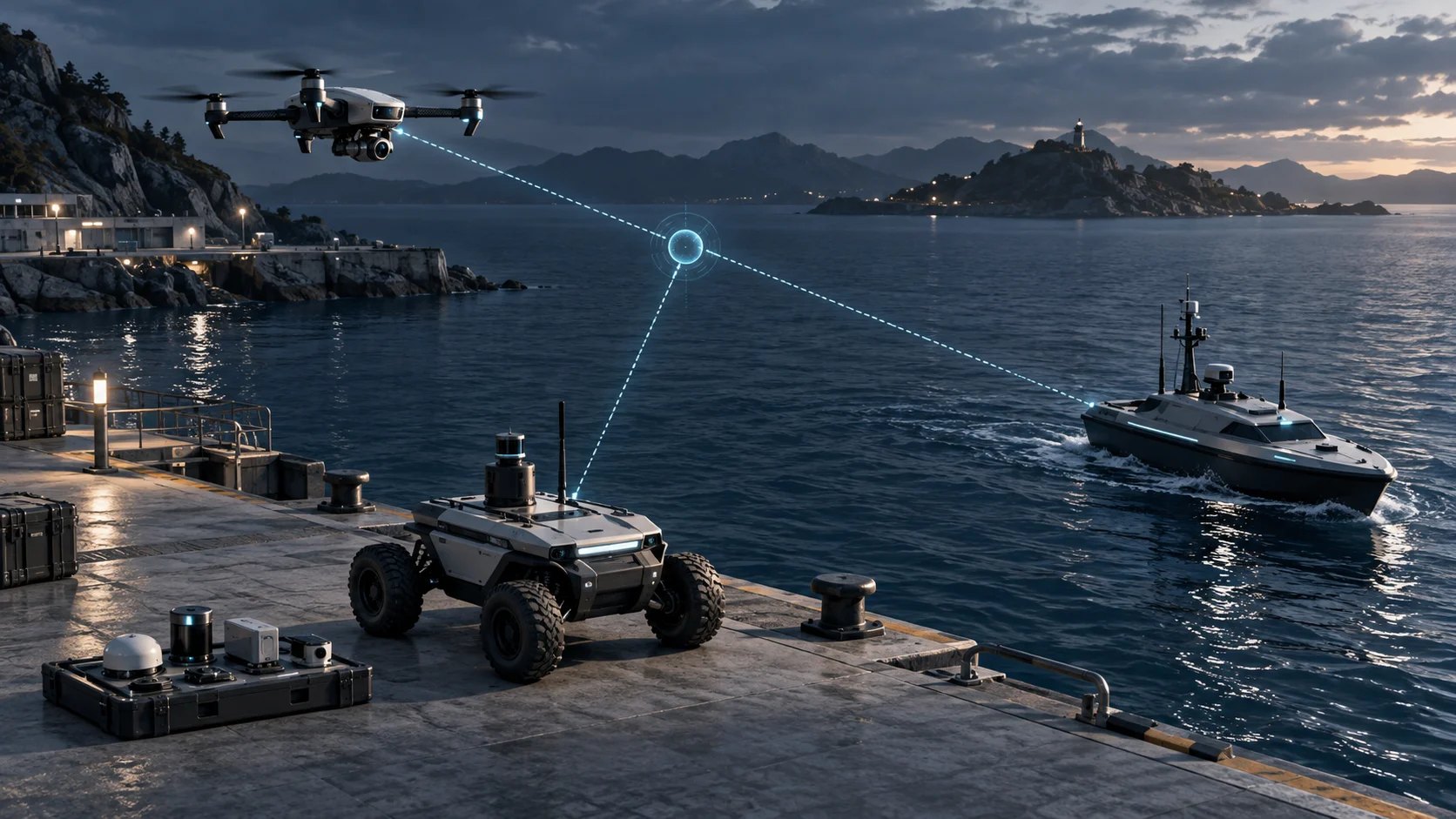
BAOQi addresses the gap between growing unmanned inventories and maturing coordination intelligence. Our vendor-neutral tactical decision layer brings multi-domain, multi-vendor assets into a shared mission logic for role allocation and dynamic replanning.
02 / ONE PLATFORM, ONE LOOP
From Assembly to Execution: One Closed-Loop Platform
Configure the team. Test the mission. Connect to the systems that execute.
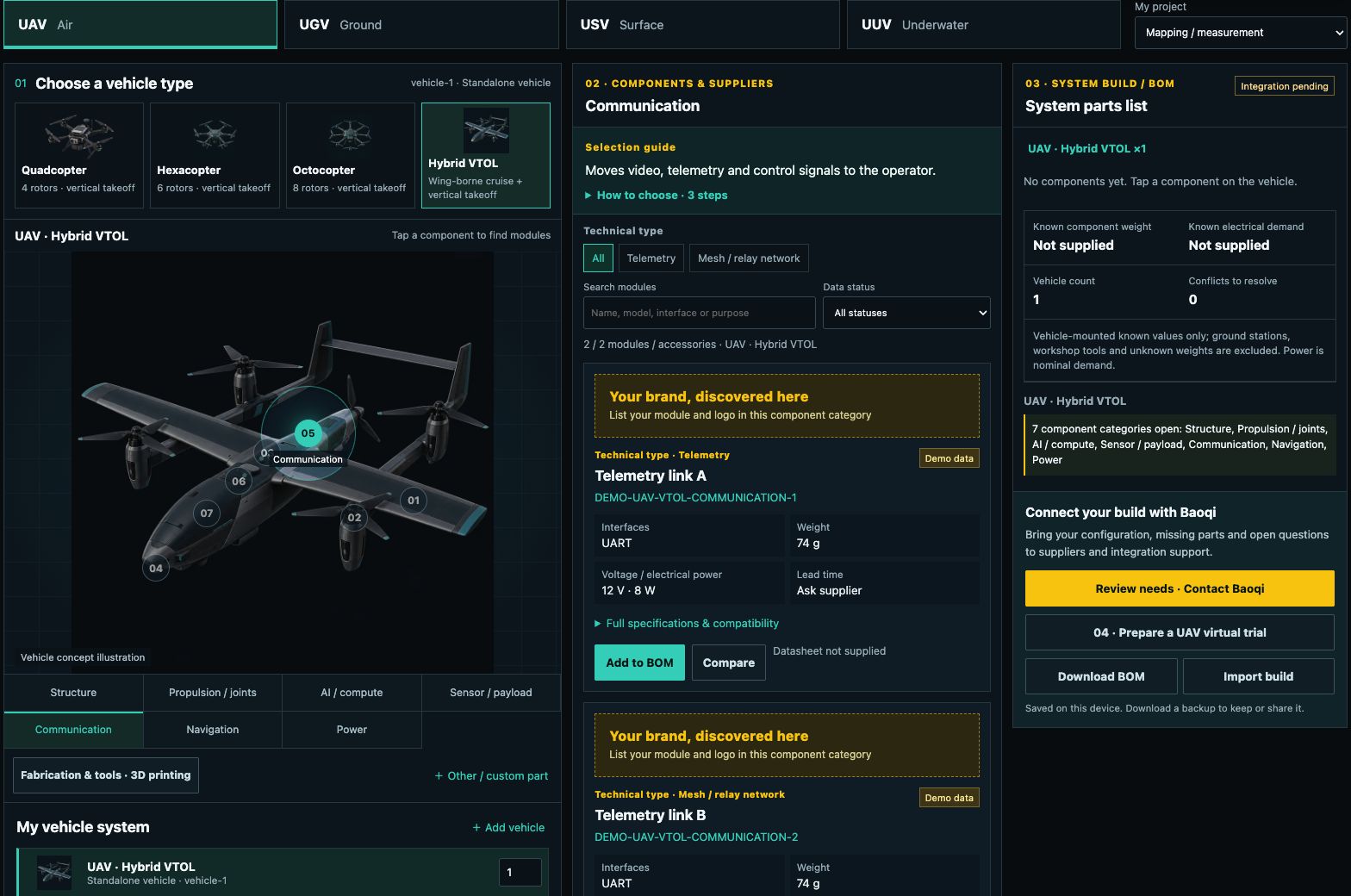
BABYLON Build Bay
Modular Fleet Assembly
Select airframe, payload, propulsion, communications, sensing and energy modules around mission roles. Combine existing inventory and affordable components into a complementary fleet.
View the Build Bay screen
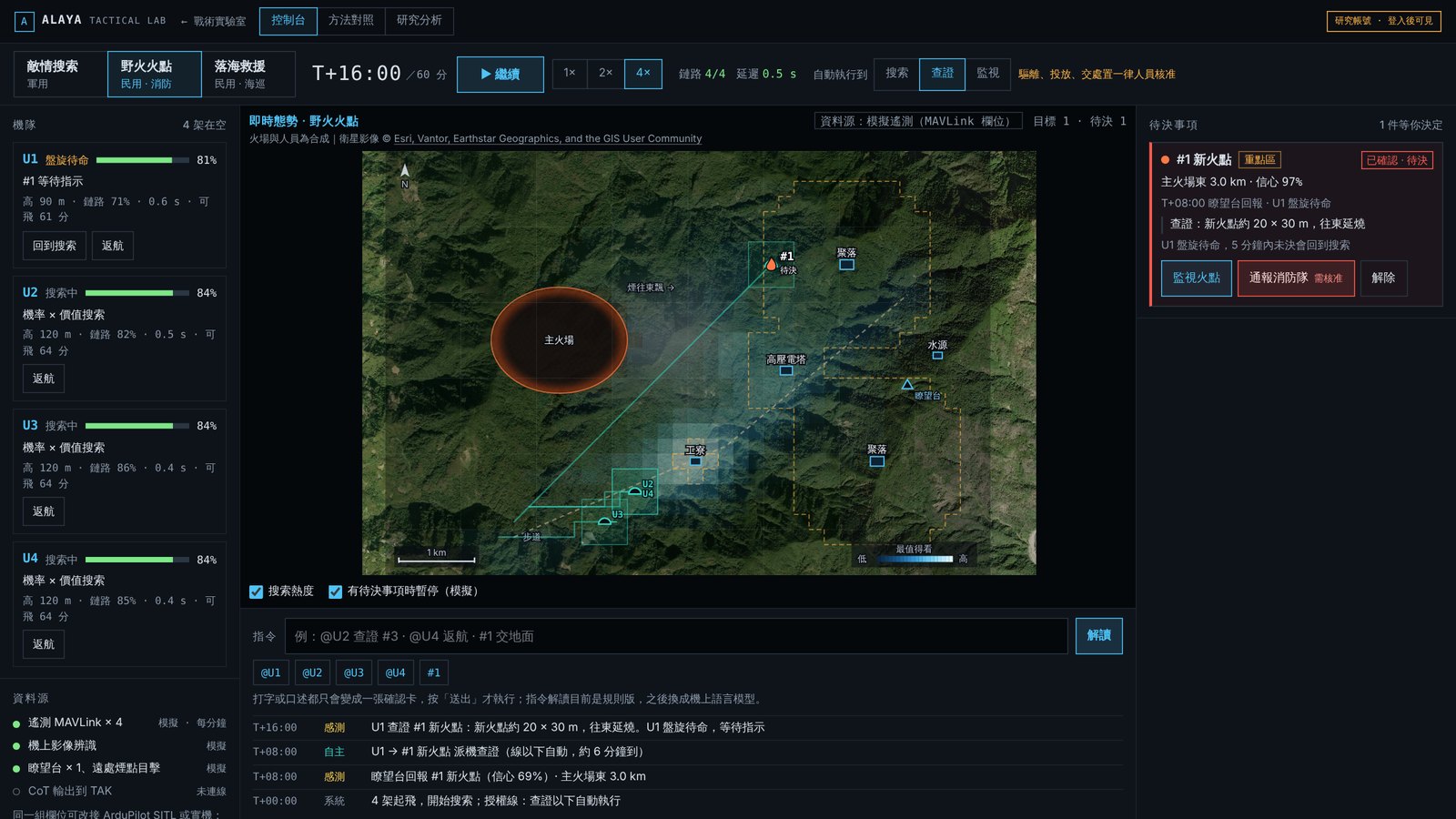
ALAYA Wargame
Mission Validation
Bring mixed-vehicle teams into ALAYA Wargame. Compare Formation, Kata, role transitions and mission outcomes across fleet configurations.
View the ALAYA mission screen
Partner Execution
Cross-Vendor Execution
Mission and role packages provide the inputs for integration with existing autopilots, GCS, and C2 systems. Partner systems handle vehicle execution.
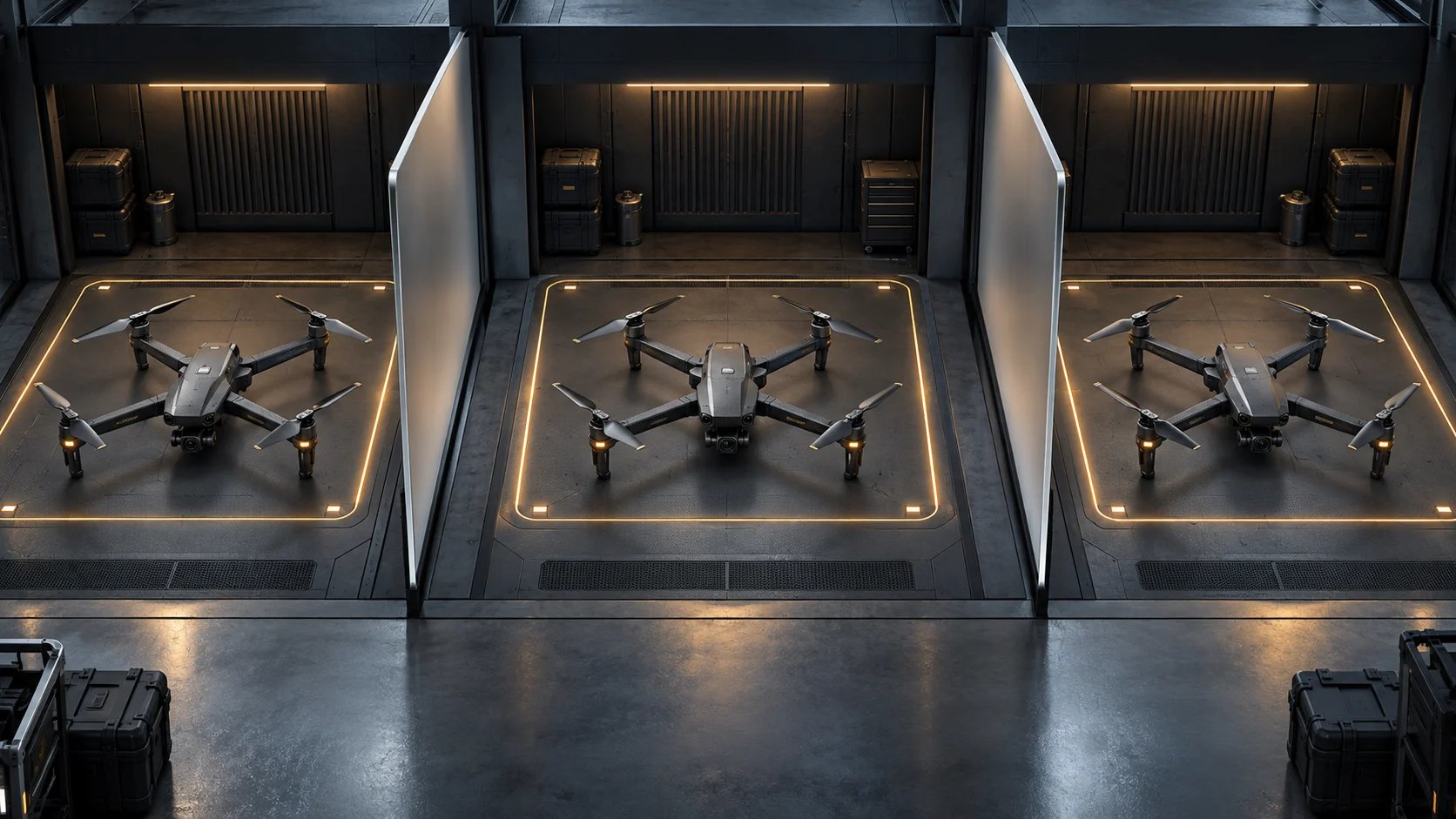
View the connected fleet illustration
BAOQi provides tactical decisions, mission plans, and role allocation. Partner systems provide flight control, navigation, and communications. Tasks and roles flow downward; status and observations flow upward.
03 / BABYLON MARKET · BUILD BAY
Build Bay is the fleet configuration workspace within BABYLON Market.
Affordable Vehicles. Greater Team Value.
Visual vehicle assembly & mission fleet configuration
Use ZERO’s Formation and Kata to guide configuration. Select complementary vehicles and components in BABYLON Market, then compare mission outcomes and fleet cost in ALAYA Wargame.
Open the full-screen Build Bay to configure your mission fleet. On desktop, you can also launch it here.
Explore component configuration and procurement benefits
The traditional approach: Mission A requires Platform A, Mission B requires Platform B. The fleet grows, and logistics grows with it. BABYLON Build Bay organizes vehicles as configurable component modules, so a mission team starts with the inventory you already have.
- 01
Modular Component Library
Airframe, payload, propulsion, communications, sensing, energy. Each is an independently managed inventory unit mapped to vendor capabilities and specifications.
- 02
Visual Assembly
Arrange components in a visual Build Bay. Compare supplier- or user-provided range, endurance, communications, payload, and cost data alongside compatibility constraints.
- 03
From Build Bay to ALAYA Wargame
Assemble your mission fleet in the Build Bay below,
- 04
Inventory with Dependencies · In development
Every asset a unit already owns, not only vehicle modules, recorded with what it depends on (link, power, GPS, consumables, crew), what takes it out of action, and its verified alternative uses. Build Bay starts from that inventory, so the fallback is planned before the mission rather than improvised during it.
Reduce Procurement Pressure
Manage modular inventory and evaluate reuse across missions before adding another dedicated fleet.
Design for Affordable Replacement
Explore lower-cost module combinations and mission trade-offs with explicit component and integration constraints.
Connect Taiwan’s Supply Chain
Evaluate components from domestic manufacturers within one configuration model to build mission-oriented fleets.
04 / ALAYA WARGAME
Different Vehicles. One Coordinated Team.
Formation · Kata · Adaptive roles
Heterogeneous task allocation and adaptive coordination are the core. ALAYA Wargame brings ZERO’s Formation and Kata into military mission simulations to compare team configurations, role changes, and the effects of changing conditions on mission outcomes and total fleet cost.
Think in complementary platforms: high-altitude balloons with FPV aircraft, FPV aircraft with UGVs, and aerial vehicles with USVs. Compare endurance, sensing, mobility, payload and cost to shape the team around the mission.
- Formation
- Adjustable team configurations and role relationships that combine complementary vehicle capabilities as mission conditions change.
- Kata
- Reusable coordination patterns that can be selected, adapted and recombined as conditions change.
- Adaptive Roles
- Compare how different vehicles divide work, complement one another and adapt roles as the mission develops.
Explore the coordination framework and search example
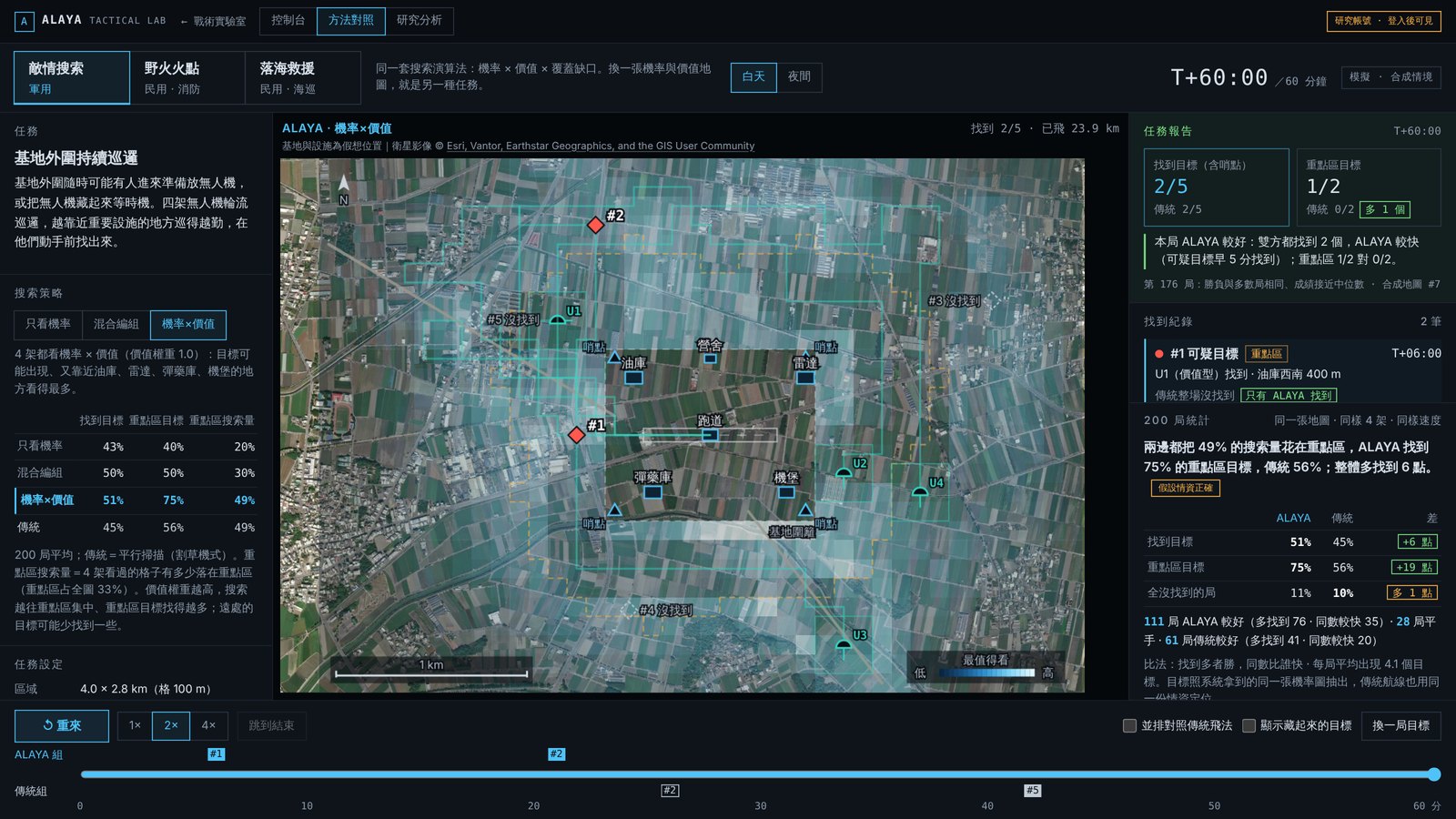
Project SHEEPDOG has evolved into ALAYA Wargame. Explore the current mission simulation environment.
- 01
Automatic Role Allocation
Use vehicle capabilities and scenario state to evaluate mission roles, and adapt allocations as conditions change.
- 02
Cross-Domain Coordination
Air, ground, and surface assets are modeled under a common tactical logic rather than as isolated platforms.
- 03
Mission Simulation & Integration
Evaluate tactical logic and team coordination in ALAYA, then use the results to plan platform integration and testing with partners.
ZERO is BAOQi’s coordination knowledge engine inside ALAYA. Formation describes adjustable team configurations and role relationships. Kata organizes reusable patterns that can be selected, adapted and recombined for comparison across different team configurations and mission conditions.
BAOQi’s founder plans to visit Ukraine in April 2027 to learn from unmanned-team formations, coordination patterns and operational experience, with the aim of informing future ZERO Formation and Kata research.
Explore ZERO and coordination under disrupted communications ↗
MISSION-LED COMPOSITION
Mixed assets. Mission-led teams.
Combine complementary capabilities. Use Formation and Kata to adapt roles and reconfigure the team around each mission.
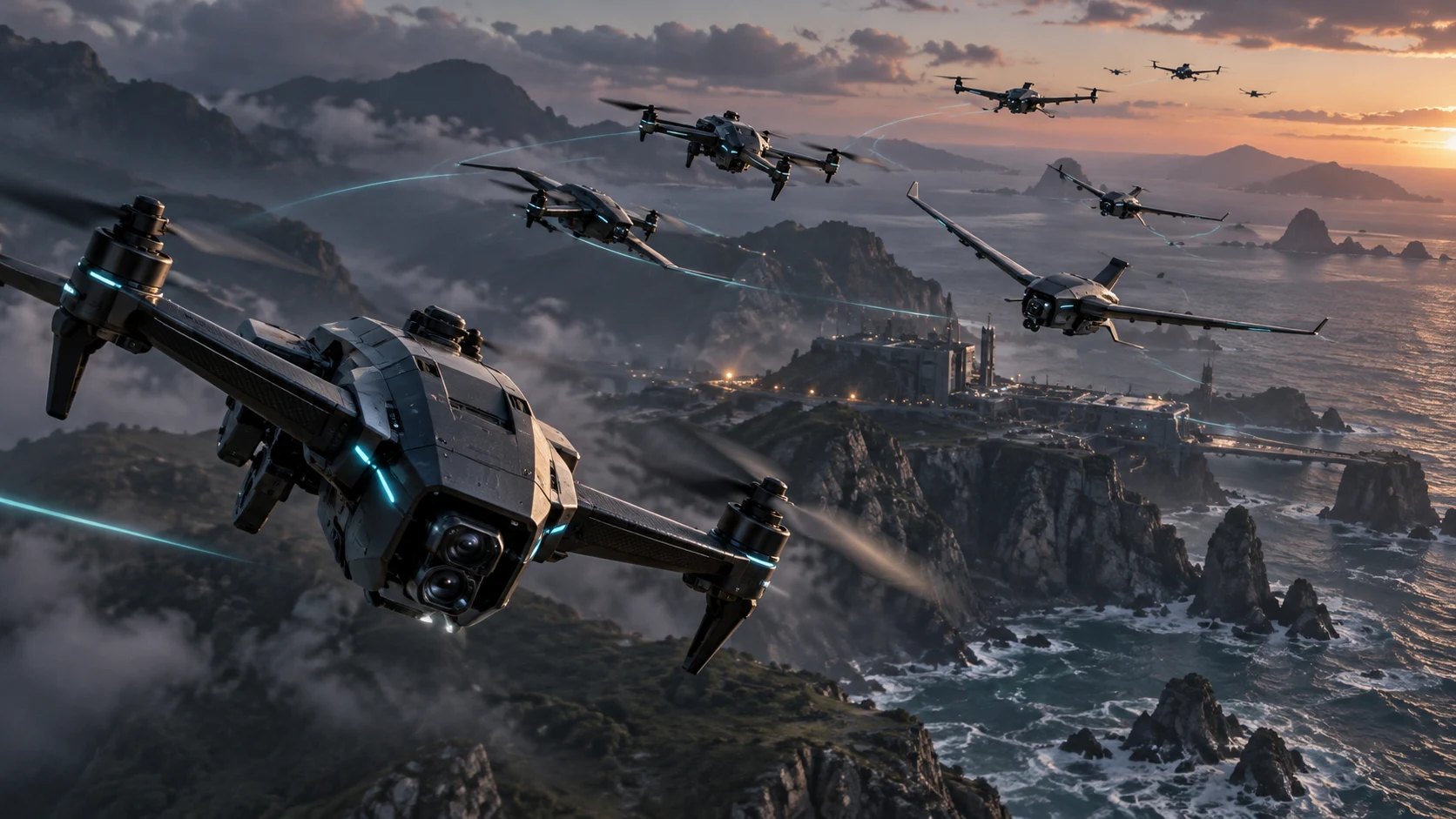
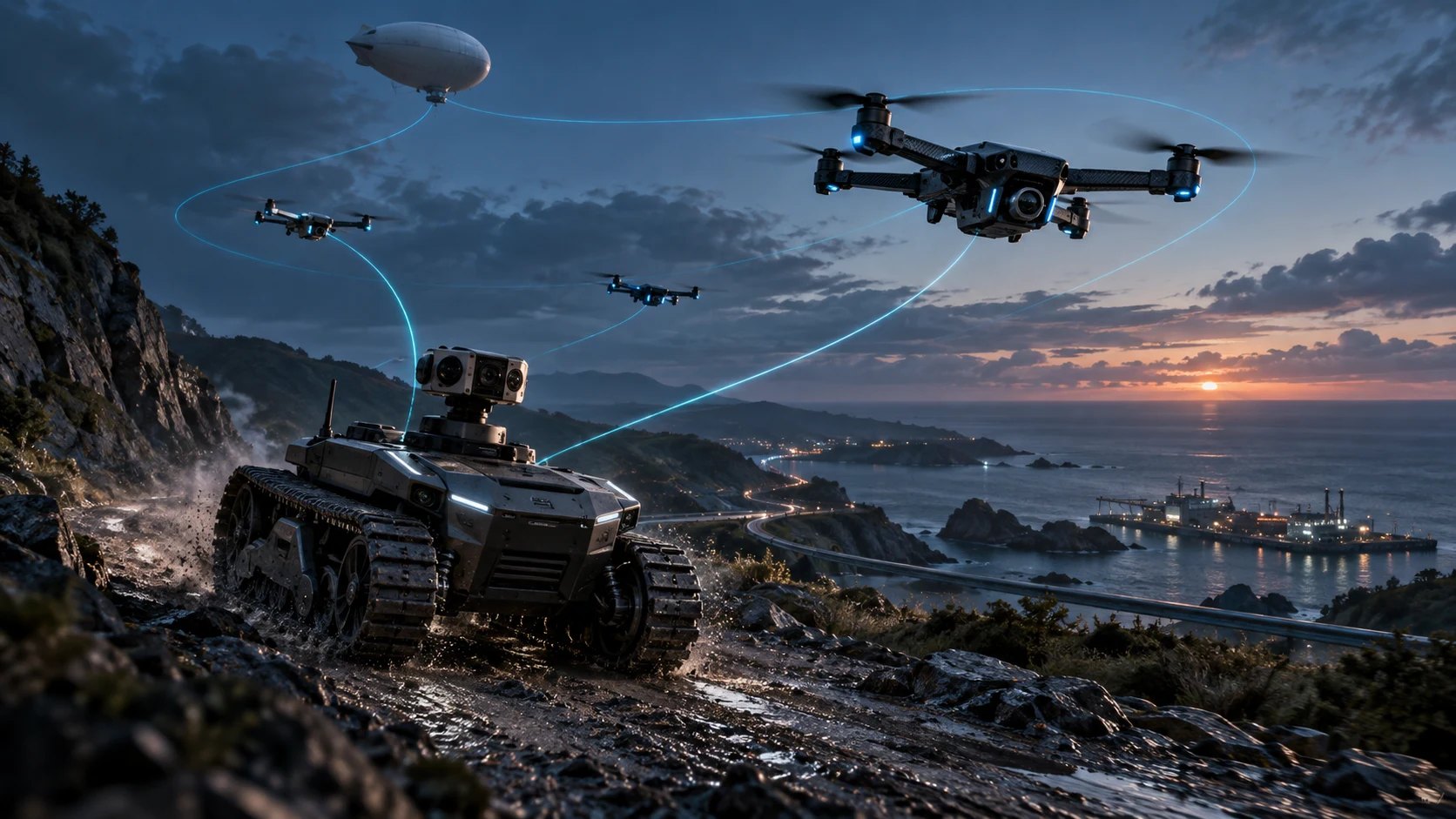
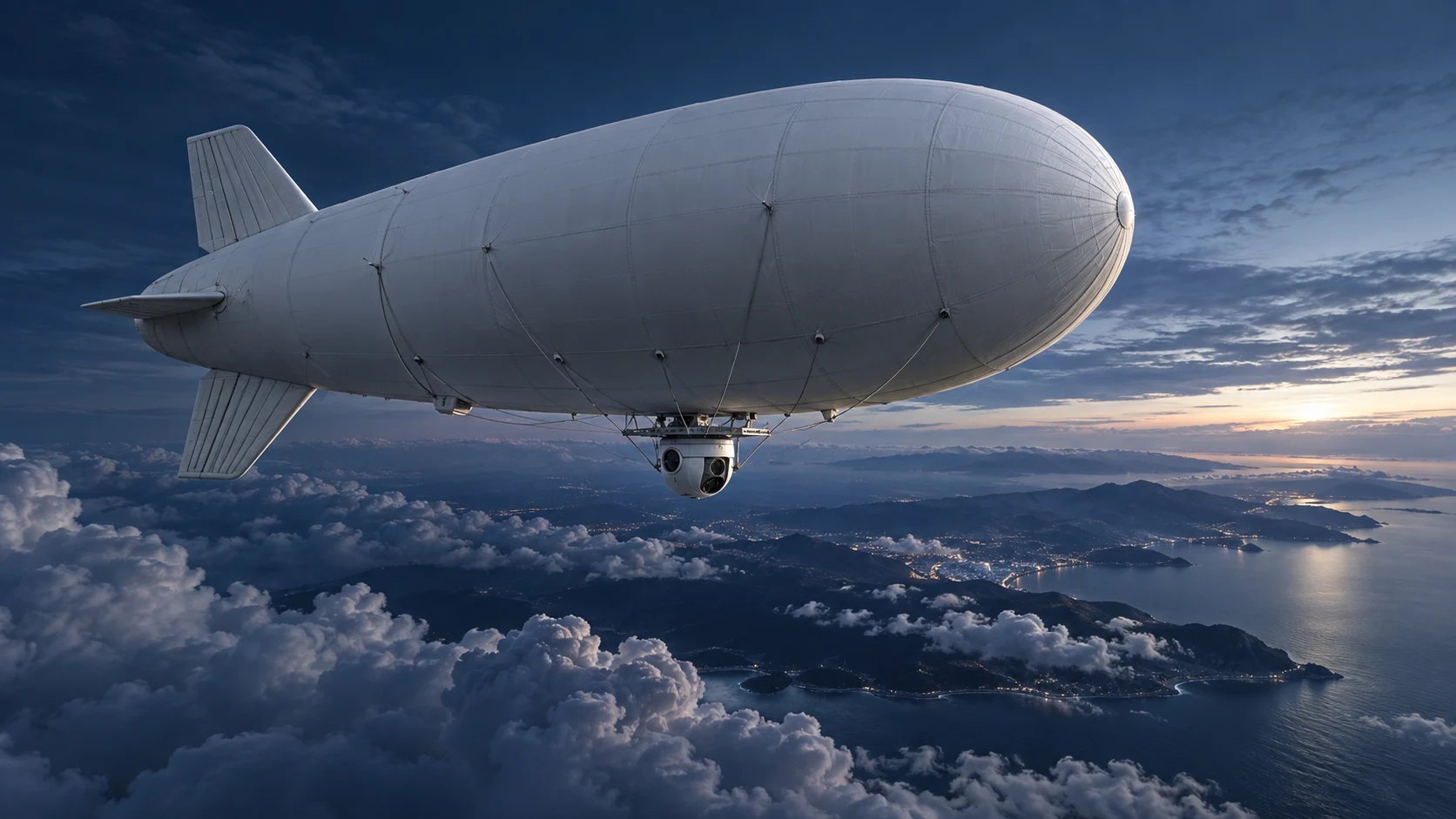
High-altitude platforms
Persistent observation
Combine long endurance and wide-area observation to provide situational information for team-level mission planning.
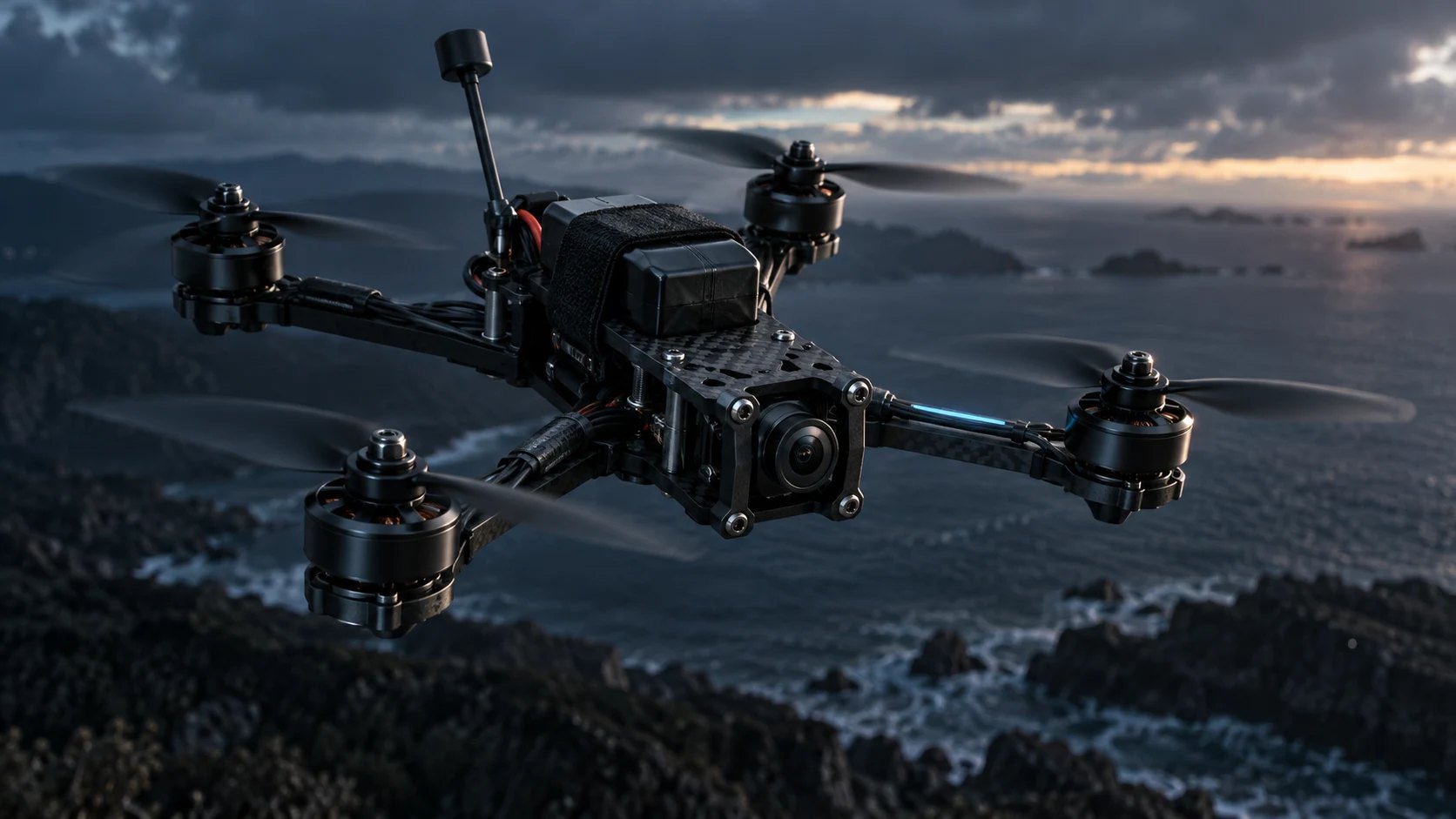
FPV
Agile observation
Pair agile movement with live imagery for close-range observation and coordinated work with other platforms.
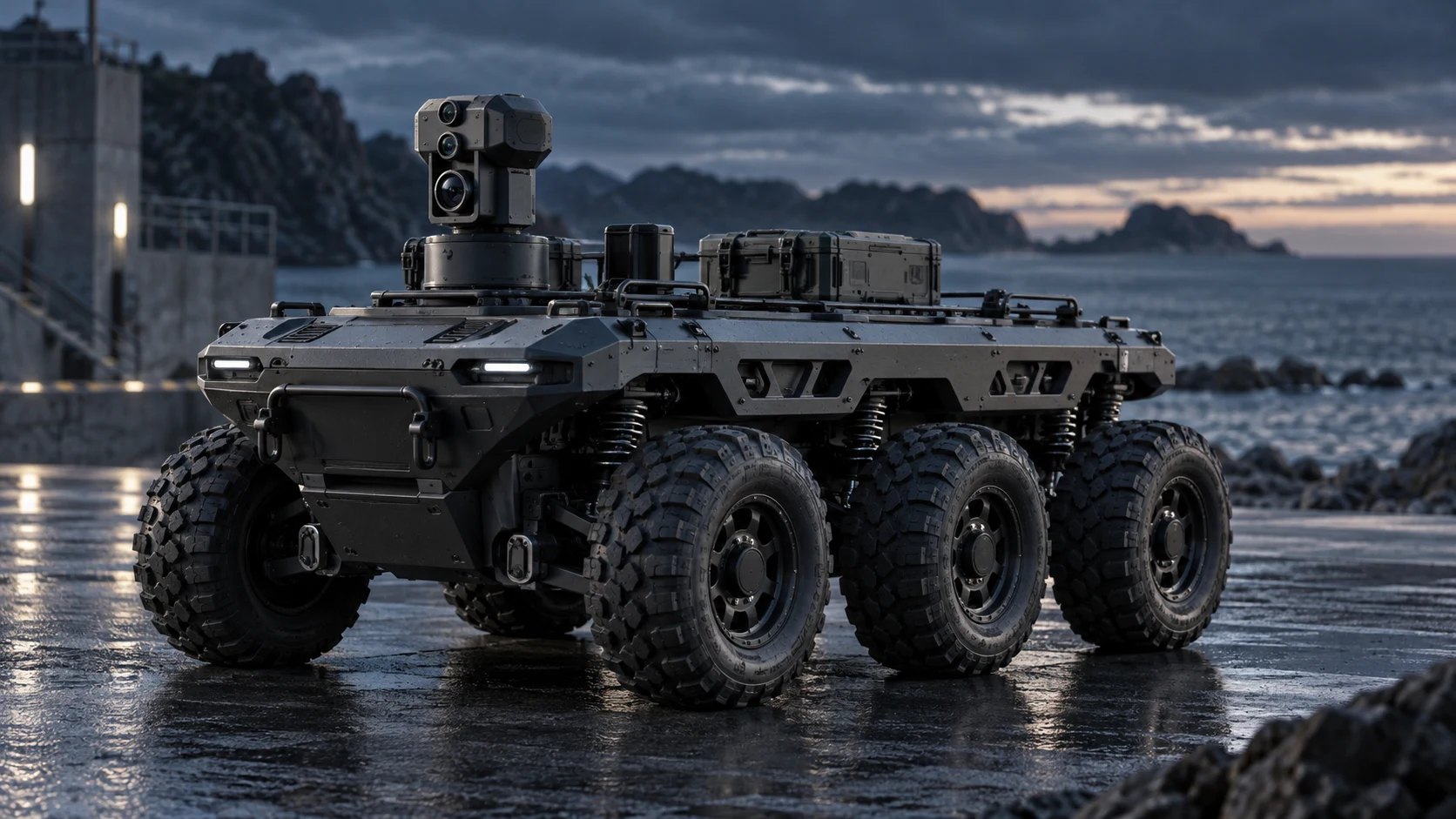
UGV
Ground support
Bring ground sensing, logistics and payload support into the team, complementing airborne assets and expanding configuration options.
Match fleet size and capability to the mission. Make every part of the budget count.
ZERO provides Formation and Kata coordination knowledge. BABYLON Market assembles the asset mix for the mission. ALAYA Wargame compares roles, coordination and total cost, then supports integration with existing autopilots, GCS and C2.
MISSION LIBRARY
Mixed-Vehicle Teams. Multiple Missions.
The same coordination core supports military reconnaissance, infrastructure protection and maritime monitoring. Search and rescue is one application.
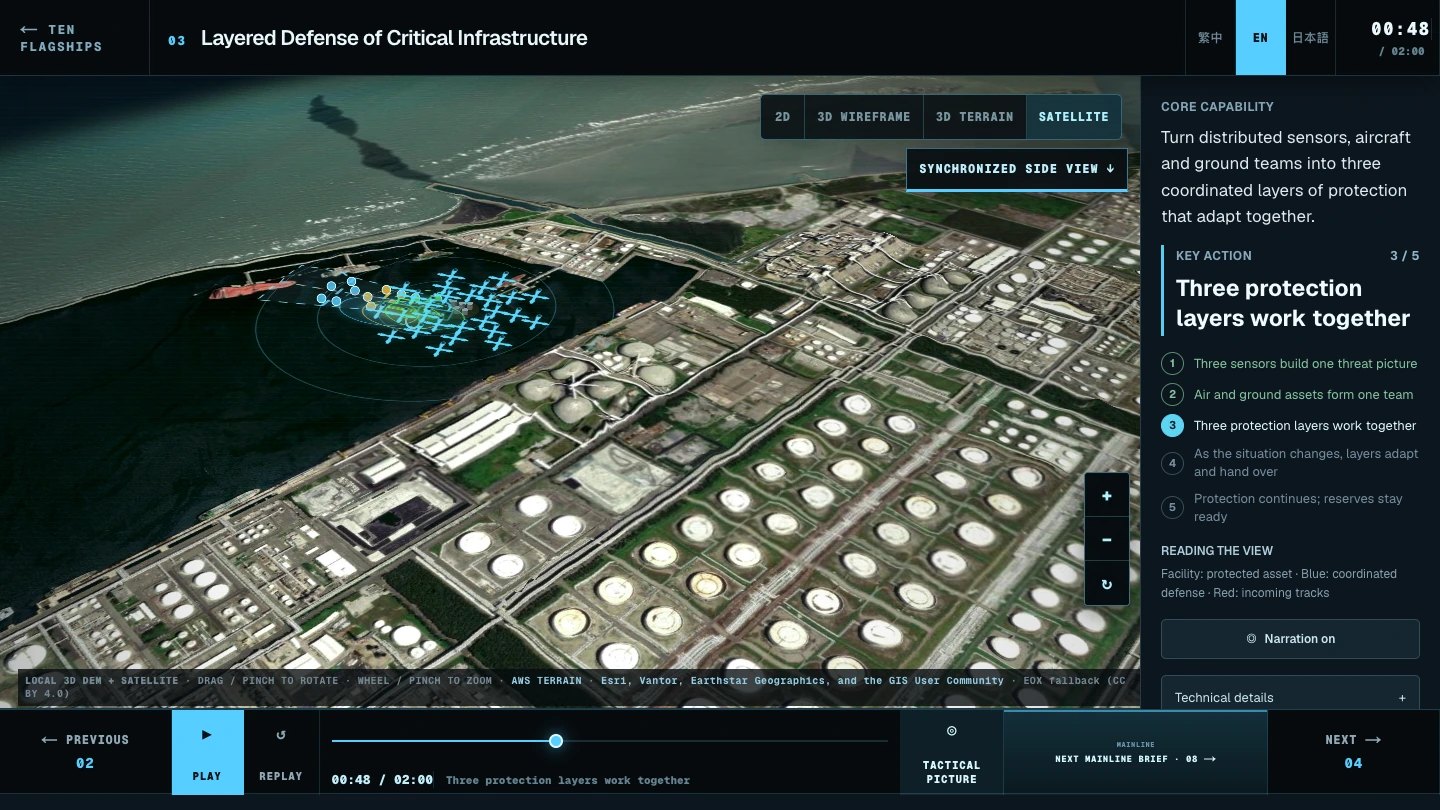
Infrastructure Protection
Evaluate detection, task allocation, and reserve coordination across multiple protective layers.
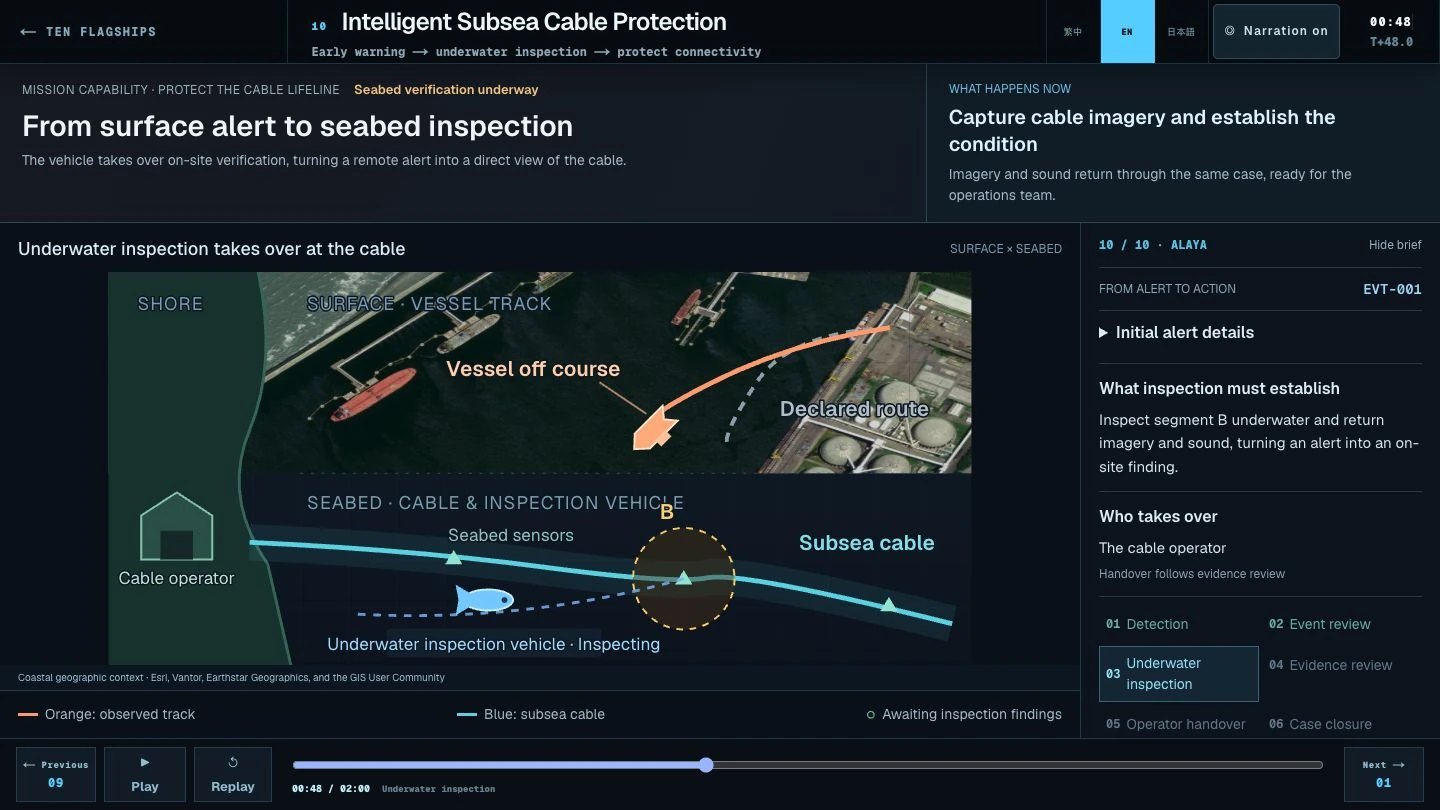
Maritime Monitoring & Protection
Coordinate vessel tracking and anomaly monitoring with underwater inspection, evidence review, and operator handover.
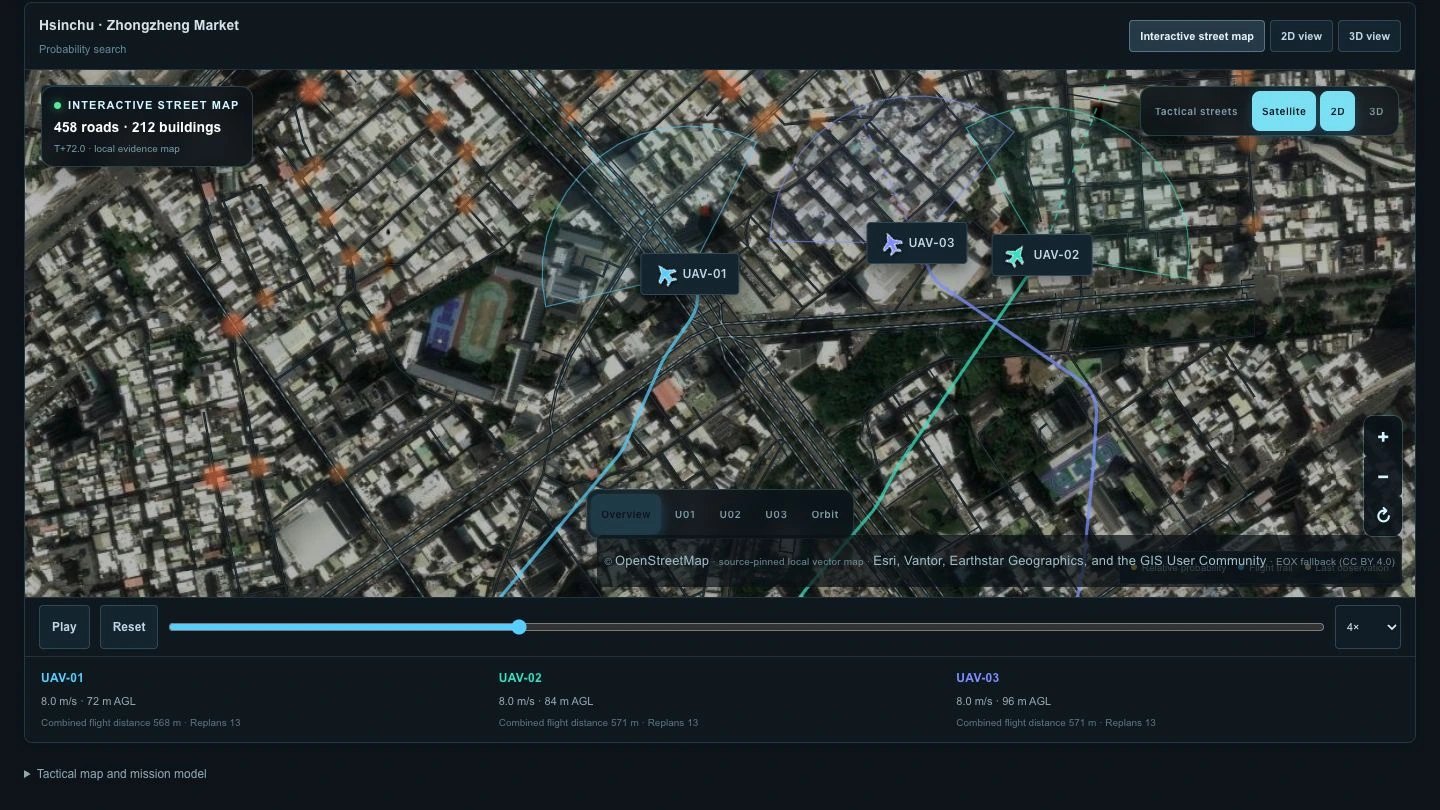
Urban Probability Search
In this example, three UAVs coordinate search across a real-street scene, updating priorities and coverage as observations arrive.
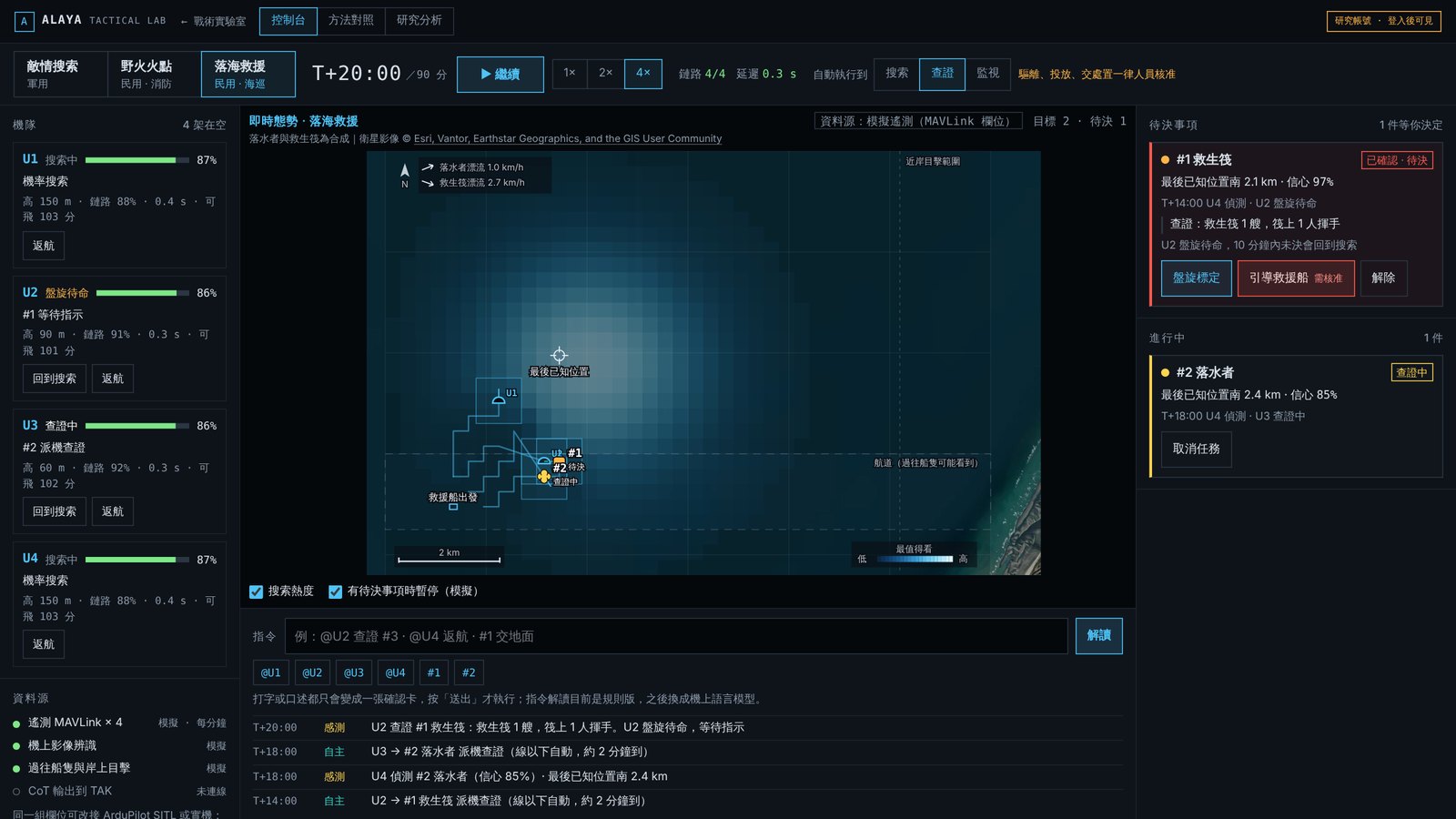
Search & Rescue Coordination
Probability-guided multi-asset search, adapting focus and roles as new observations arrive.
05 / ARCHITECTURE THAT ADAPTS
Why BAOQi?
Optimize mission outcomes and total team cost. Configure complementary capabilities around each mission, then compare fleet, integration, operator and replenishment costs alongside results to guide where the budget creates the most value.
Compare the six architecture choices
| Design choice | Closed proprietary model | BAOQi approach |
|---|---|---|
| Optimization target | Individual platform performance | Mission-level team outcomes and total cost |
| Hardware | Vendor-specific platform stack | Hardware-agnostic architecture; integration per platform |
| Mission expansion | Add a dedicated platform | Reconfigure existing modules and evaluate fit |
| Replacement cost | Platform-level replacement | Explore modular combinations and replacement options |
| Supply chain | Original-vendor dependencies | Support evaluation of multiple Taiwan suppliers |
| Decision layer | Often embedded in the platform | Independent tactical layer designed to connect with existing C2 |
BAOQi · Partnerships & Integration
Defense Technology Partnerships & Integration
Turn mission requirements into a focused cooperation and integration plan. BAOQi connects demand owners with technology providers, combining complementary capabilities around clear interfaces, responsibilities and validation milestones.
Our approach follows Mission Economics: affordable systems at scale, tolerable equipment losses, practical replacement and replenishment, heterogeneous coordination, and mission value measured across the full lifecycle.
06 / PARTNER ECOSYSTEM
A Partner Network. Entry by Capability.
An open ecosystem connects research, vehicle engineering, system integration, and defense technology. Explore the organizations represented in our partner network and the capabilities needed for the next mission.
Guiding institution: NTU Unmanned Vehicles Research and Development Center




Explore BAOQi
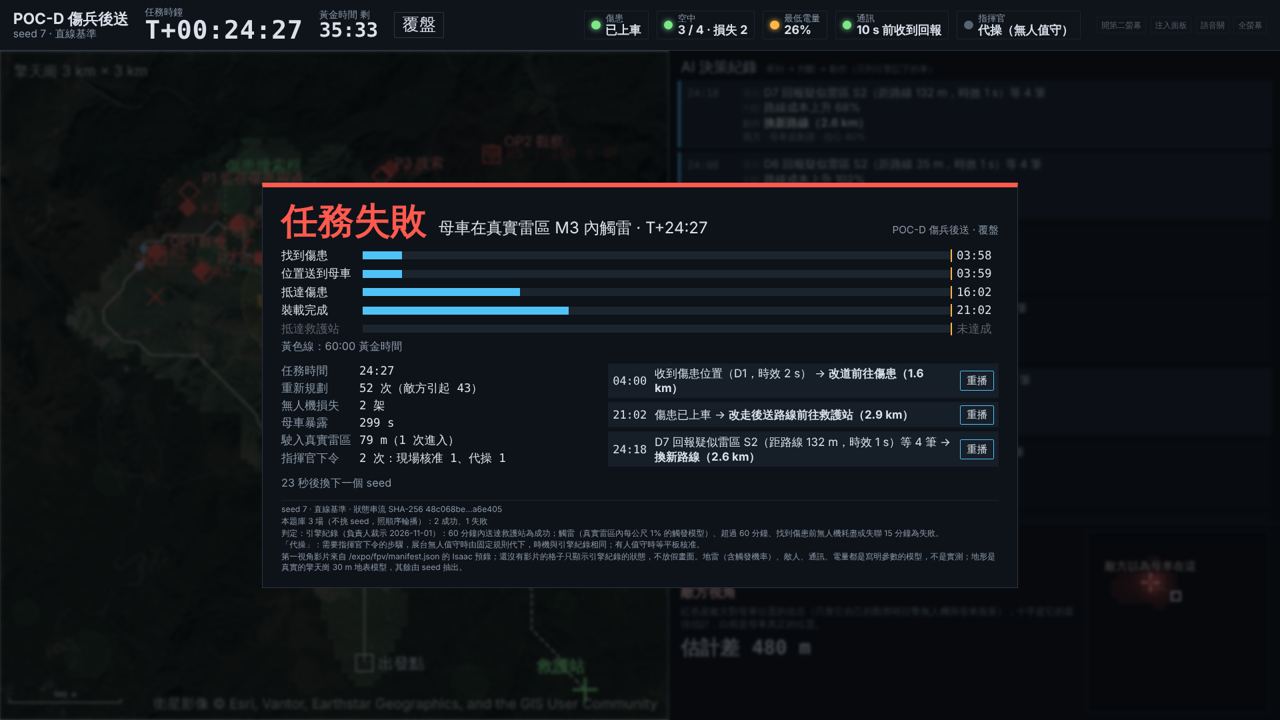
Two screens. One wargame, played to the end.
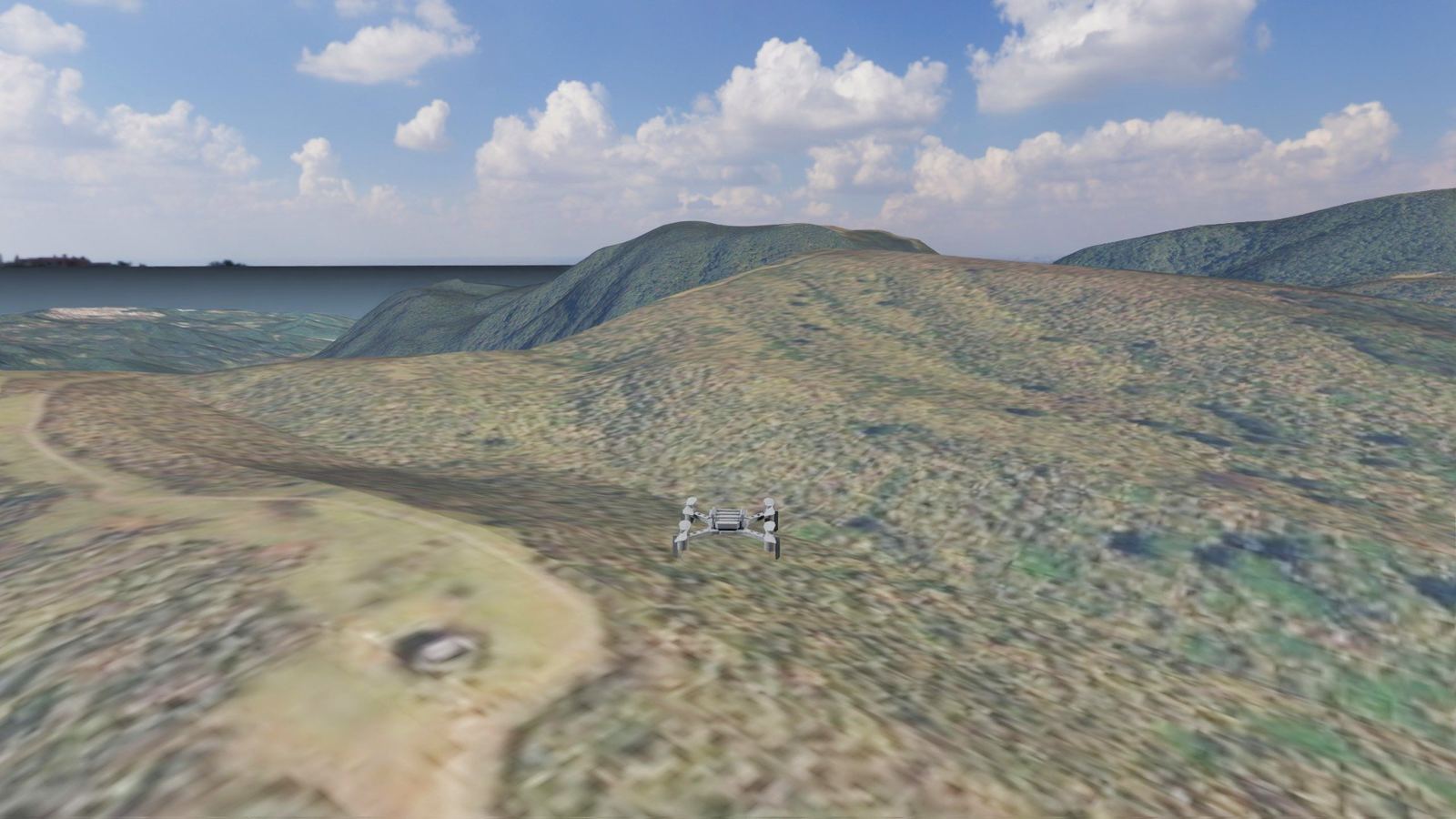
Left: multi-drone first-person view. Right: the god’s-eye picture with every AI decision. Each run ends in success or failure, then the after-action review, then a new battlefield.
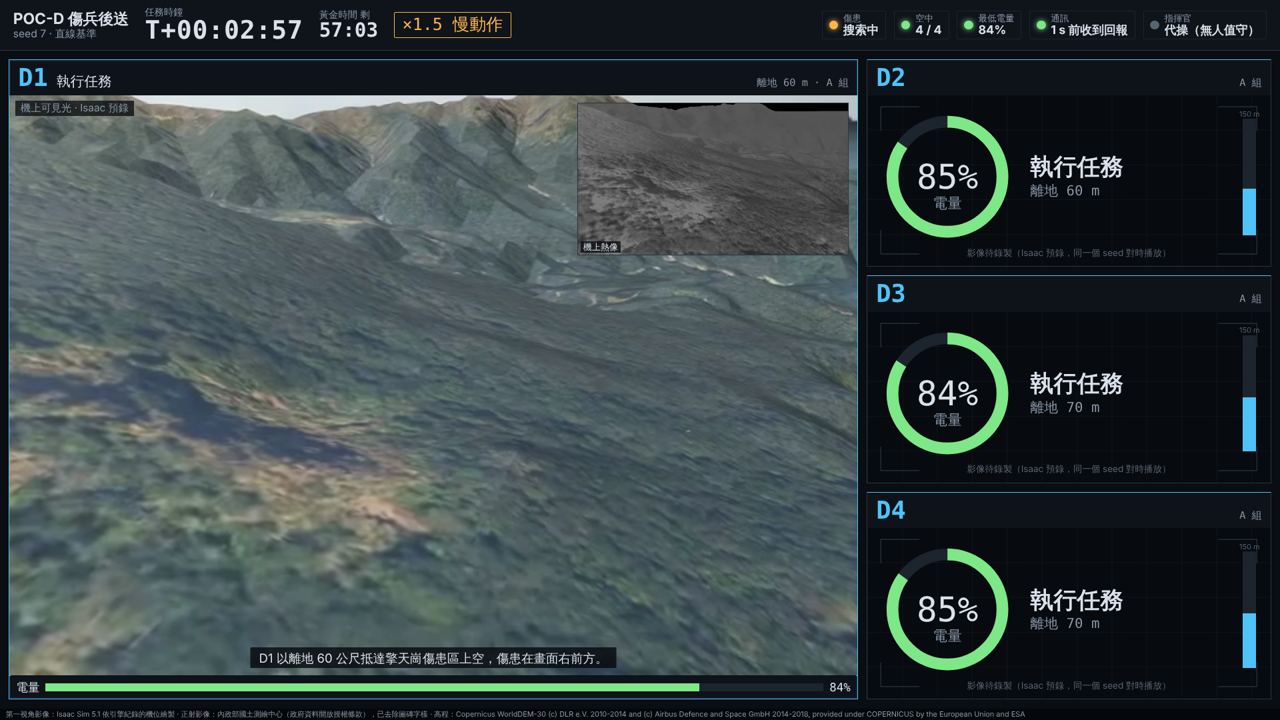
Left screenMulti-drone first-person view, airspeed, battery and track
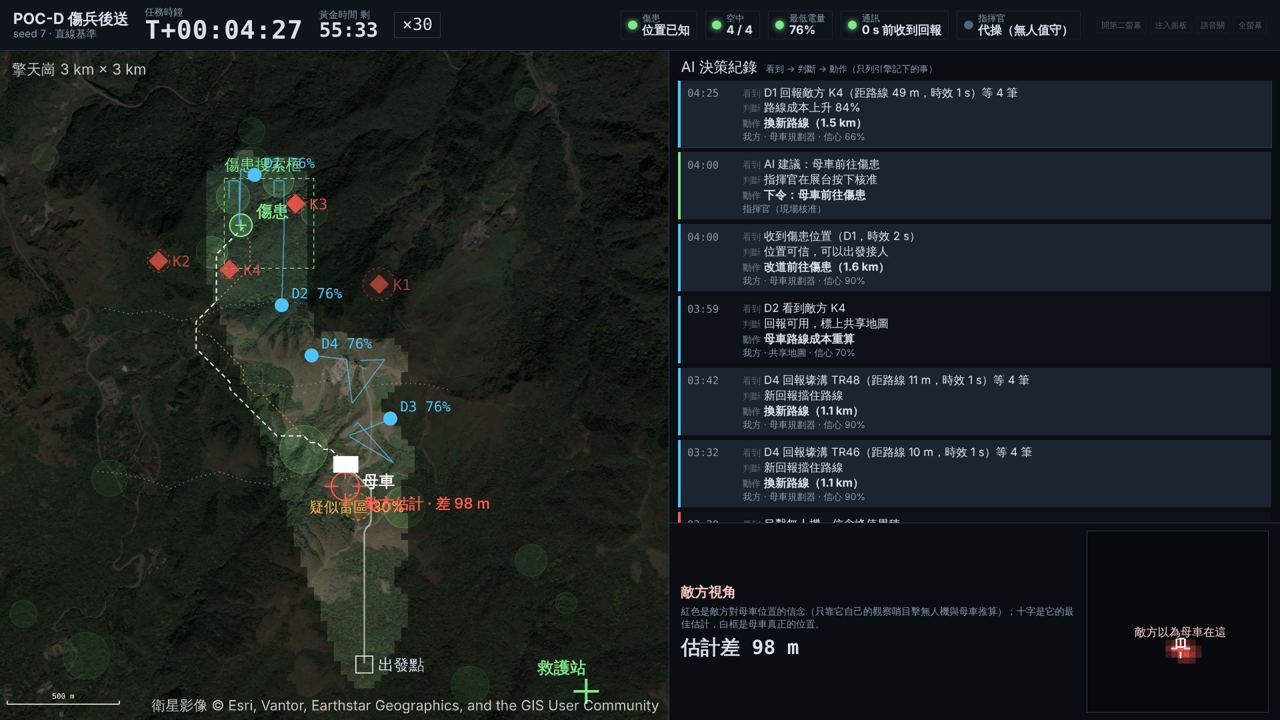
Right screenGod’s-eye view, threat picture, AI decision log and replanning
- Startdraw a battlefield
- Wargamescout, report, replan
- Outcomedelivered or failed, decided on the spot
- Reviewstep through the key decisions