SCARCITY-AWARE ORCHESTRATION · HETEROGENEOUS FLEETS
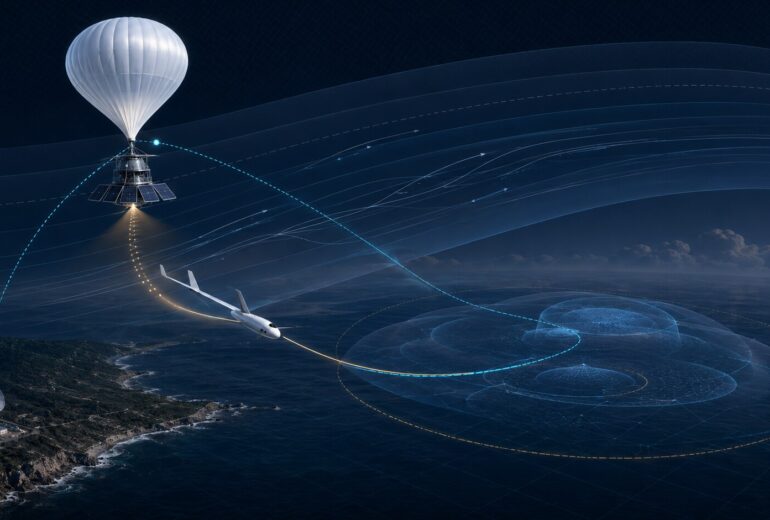
War does not deliver a clean, homogeneous fleet. SHEEPDOG is being designed to turn whatever survives, arrives and connects into a mission-effective force—while preserving scarce capabilities for the missions that need them most.
A recent industrial-mobilization study, reported by the South China Morning Post, estimated that even full mobilization could satisfy only about 60% of a modeled wartime demand for drones. That study does not validate SHEEPDOG. It validates the operating condition SHEEPDOG must address: supply remains constrained, fleets become mixed, and commanders must create mission value from the assets that are actually available.
The product question is not: which airframe is best?
The question is: which mission–capability composition creates the highest value now, without consuming the capability the next mission cannot replace?
- From mixed inventory to mission-effective force
- A decision model that prices scarcity
- Six modules make the claim testable
- Heterogeneous capability also means heterogeneous trust
- The benchmark: HETEROGENEOUS-SCARCITY-01
- A deliberately heterogeneous physical POC
- Close the loop from operations to industrial demand
- Precise external claim
- Build the bounded heterogeneous-fleet POC with us.
From mixed inventory to mission-effective force
Scarcity changes the meaning of value. Acquisition price is only one input. A low-cost aircraft may become the fleet’s most valuable node if it carries the only thermal sensor, compatible relay, trusted firmware or serviceable battery set. SHEEPDOG therefore needs to reason over missions and capabilities, not model names alone.
→
→
→
A decision model that prices scarcity
At each decision point, a mission assignment can be treated as a bounded comparison:
Replacement Shadow Cost is the wartime value of replacing a capability, not merely an airframe. It incorporates replenishment time, sensor scarcity, battery and parts stock, link compatibility, operator and maintainer familiarity, cyber trust, and future missions that only this node can support.
Six modules make the claim testable
Capability Passport
Sensor, endurance, speed, link, compute, navigation, payload, reliability, repair needs, lead time and trust tier for every node.
Mission Utility
Scores the value of a platform–role pairing in the present mission, rather than dispatching the nearest or most capable vehicle by default.
Attrition Pressure
Represents expected loss, failures, adversarial pressure and consumption of batteries, parts and specialist payloads.
Reserve Floor
Protects a minimum reserve of rare or high-value capabilities so a low-priority task cannot exhaust the fleet’s future options.
Dynamic Reassignment
Recomposes roles after loss, degraded energy, link failure, new observations or a negative observation.
Decision Log / AAR
Explains what was selected, what was preserved, which event triggered reassignment and which capability became the bottleneck.
Heterogeneous capability also means heterogeneous trust
“Use what is available” cannot mean connecting every platform directly to the full mission picture. The Capability Passport should therefore include a Trust Tier. A low-trust vehicle may receive only local waypoints and bounded context through an isolated gateway; it does not receive complete friendly positions, keys or sensitive maps. Higher-trust nodes retain access to higher-sensitivity roles.
The benchmark: HETEROGENEOUS-SCARCITY-01
The claim becomes credible only when it beats simpler allocation methods under repeatable conditions. The proposed benchmark uses 18 vehicles across four or five capability profiles. Sensors, endurance, speed, links, trust and maintenance status vary; 20–30% begin unavailable; batteries, links and vehicles fail during the run; replacement arrival times remain uncertain.
Evaluation should measure weighted mission value, time to first effective observation, reassignment latency, rare-capability preservation, unnecessary high-value losses, Reserve Floor violations, capability-gap duration, operator interventions and sustainable operating time under the same replenishment volume.
A deliberately heterogeneous physical POC
A useful first hardware demonstration is not four identical aircraft flying together. It is three low-cost programmable aircraft conducting wide-area search plus one different platform with the better camera, endurance or link. SHEEPDOG decides when that scarce platform is worth committing to confirmation or relay, recomposes the search when one node degrades, and produces an AAR explaining why the high-value node was preserved at the start.
We are not demonstrating four aircraft in the air.
We are demonstrating that the system knows which capability is worth using, when it is worth using, and what must remain in reserve.
Close the loop from operations to industrial demand
The upstream study asks how many platforms industry can produce. SHEEPDOG addresses the downstream question: how can the available capability pool create the highest sustained mission value? Over time, the loop can connect inventory and production to mission allocation, attrition and AAR, then return a more useful demand signal.
The output should not be only “100 more units of model X.” It should identify the capability gap: long-range links, thermal sensing, compatible batteries, trusted compute modules or relay nodes required over the next operating window.
Precise external claim
- The industrial study supports the scarcity premise; it does not prove SHEEPDOG performance.
- SHEEPDOG performance must be established through HETEROGENEOUS-SCARCITY-01 and bounded physical POCs.
- The product position is: Scarcity-aware orchestration for heterogeneous unmanned fleets.
Sources. The study details and publication timing are reported by the South China Morning Post. The researcher’s name is Zhang Jihai / 張紀海, consistent with the Beijing Institute of Technology profile and BIT’s published faculty activities. Figures cited from press coverage remain study-scenario outputs, not forecasts of a specific conflict.
PROGRAMMABLE AIRFRAME · EDGE AI · LEGAL FLIGHT
Build the bounded heterogeneous-fleet POC with us.
We are looking for small programmable UAVs, edge-compute modules and compliant flight-test partners who can expose a capability interface and participate in a measurable 90-day integration.